


 English
 عربى
عربى Español
Square Plastic Food Tray: Materials, Uses & Buying Guide from a Factory
The Square Plastic Food Tray: Quiet Geometry for Busy Kitchens
Food businesses are standardizing on square trays for one reason: usable space. Here is what that shift means for your bakery, deli or takeaway line.
A square plastic food tray looks unremarkable on the shelf. Walk through a commercial bakery, a sushi prep room or a high-volume takeaway kitchen, however, and you will see this format doing more operational work than almost any other package on the line. The advantage is not aesthetic. It is arithmetic.
A round tray is friendly to the eye, but four round trays on a stainless-steel cart leave empty crescents around every edge. Square trays change the math. For the same nominal width, a square holds roughly 27 percent more usable area than the largest circle that fits inside it, and it tiles edge-to-edge in a cooler, a delivery box or a display case without dead zones.
That is the first conclusion of this guide: square plastic food trays are a capacity and workflow decision, not just a presentation preference. The second is that material matters more than shape once heat, clarity and rigidity enter the conversation. Keep both in mind and you will order the right tray the first time.
Why Square Wins on Space and Service
Square trays stack with straight sidewalls, glide into standard wire shelving, and make portion lines obvious to the person packing them. In practical terms, the geometry translates into day-to-day savings:
- Rack efficiency. More trays fit per shelf compared with round formats of similar nominal size.
- Stable stacking. Vertical sidewalls and corner reinforcement reduce tipping during transport and storage.
- Cleaner cuts. Rectangular baked goods, cake slices and sandwich quarters align with tray walls, so crushed edges and wasted product drop noticeably.
- Faster service. A uniform tray footprint lets staff rotate stock quickly without re-arranging shelf layouts.
The effect is small on any single tray and large over a production shift. Kitchens that switch from round to square formats often discover that existing holding equipment now carries more units, which delays the point where an extra refrigerator or delivery run becomes necessary.
PET, PP or PS: Match the Material to the Working Condition
"Plastic food tray" is a category, not a material. Three thermoformed plastics dominate the square tray market today — PET, PP and PS. Each handles temperature, moisture and impact differently, and the choice determines whether the tray survives the journey from kitchen to customer.
| Property | PET | PP | PS |
|---|---|---|---|
| Service temperature | -20°C to 60°C | -20°C to 110°C | -10°C to 70°C |
| Clarity | High, glass-like | Medium, translucent | Low, usually opaque |
| Rigidity at thin gauge | Good | Moderate, more flexible | High, can feel brittle |
| Best fits | Bakery, fruit, cold display | Hot takeaway, microwave, frozen food | Cold snacks, short-cycle catering |
For cold presentation, PET trays deliver the transparent shelf appeal that fruit, pastry and sushi counters rely on. For hot food, PP withstands the temperature of freshly fried or sauced dishes and tolerates microwave reheating without structural softening. PS is the most cost-efficient option when the application stays cold and the service cycle is short — it feels firm in the hand but becomes unreliable above 70°C.
"The tray is not auxiliary packaging. It is the shelf, the plate, the portion boundary and the first thing a customer touches," notes the design team at Donghang Polymer Material Technology. "Material choice therefore comes before decoration."
If you need a deeper comparison, our material-level analysis of PP plastic food trays explains how polypropylene behaves across commercial applications.
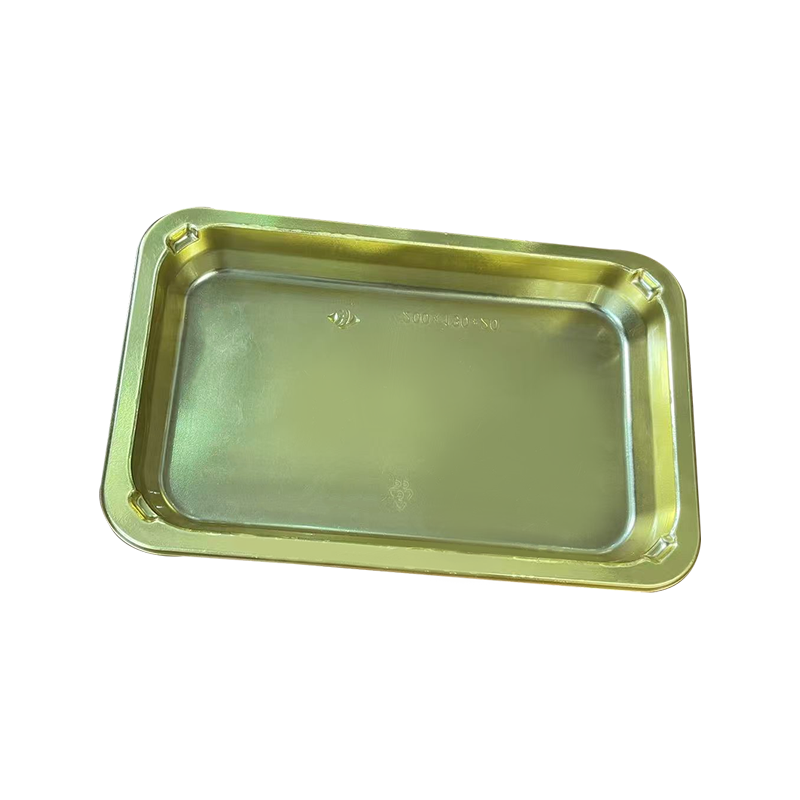 Disposable PP Thickened Pastry Tray for Baked GoodsThis tray's reinforced edges and non-slip surface keep pastries stable during display or transport. Its thicker build resists bending, making it a practical choice for heavier portions in food-service settings.View Product →
Where Square Trays Do the Real Work
Square trays appear throughout the food-service chain, but three contexts make the strongest case for the format.
Bakery and Patisserie
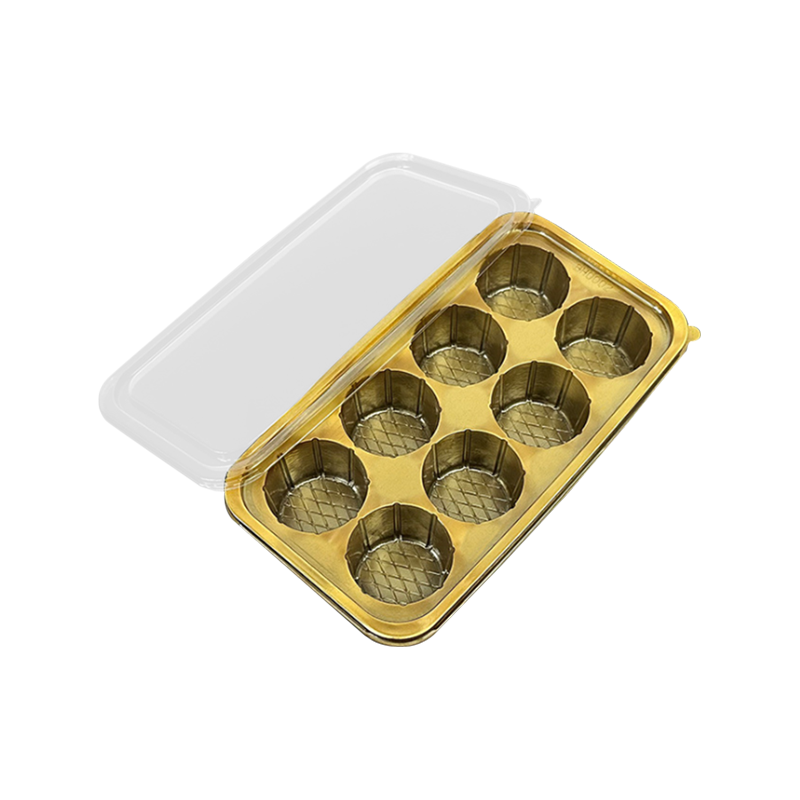
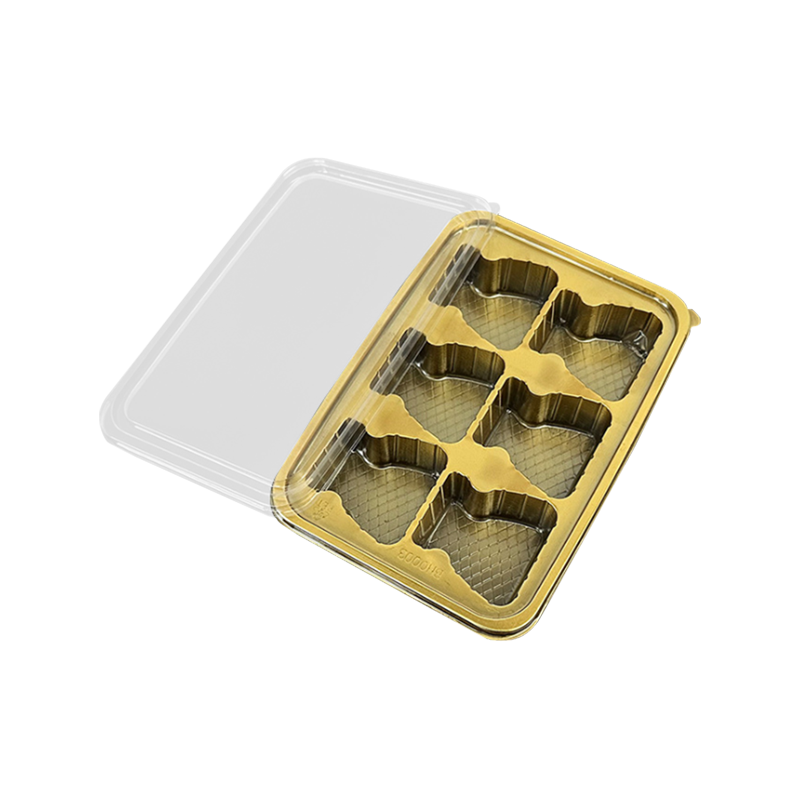
Cake slices, brownies, tarts and layered desserts follow rectangular cut lines, so square tray walls match the product instead of fighting it. Transparent PET variants display from above and from the sides, while gold and silver finishes give bakery counters a premium retail presence. Bakeries that sell by the slice value one tray geometry that serves both display and takeaway packing.
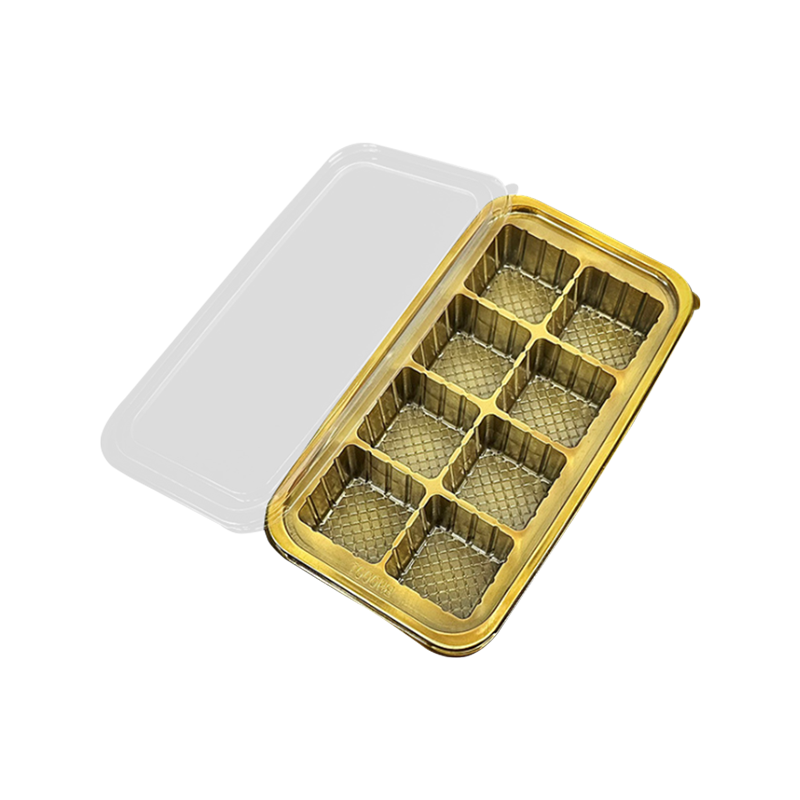
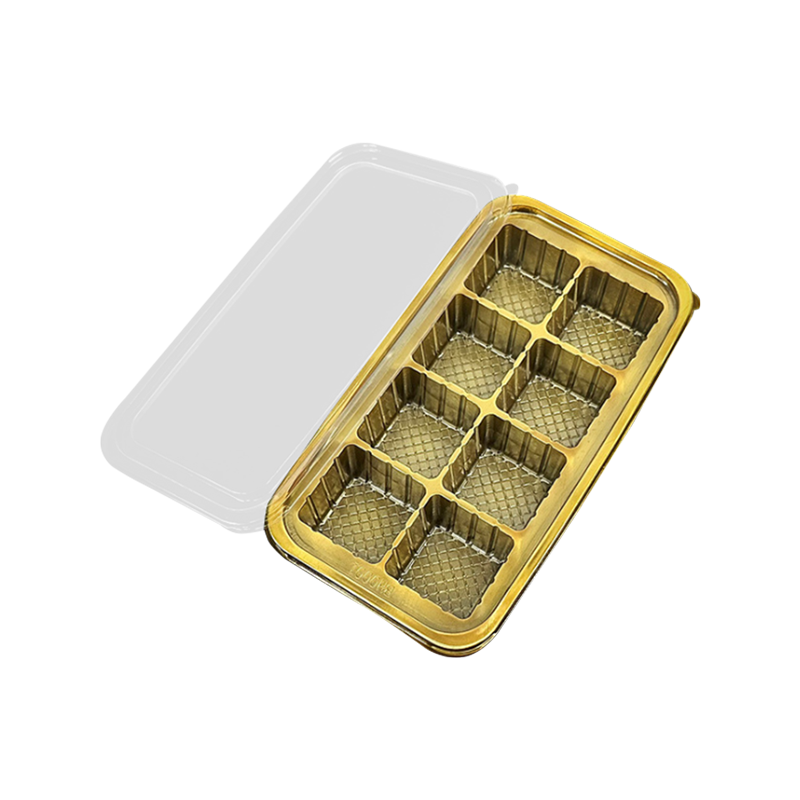 8-Cavity Square Gold PET Packaging BoxThe eight-cavity design organizes multiple items at once, while gold PET adds a premium look. Durable and moisture-resistant, it suits bakery displays and takeaway packing that need clear visibility and stackability.View Product →
Sushi, Fruit and Ready-to-Eat Cold Food
The ready-to-eat segment lives or dies on visible freshness. Square trays with anti-fog covers keep condensation off the product, while compartmented bases separate sticky rice from delicate sashimi or keep cut fruit from touching dressing. Because the trays tile efficiently, a chilled display case holds more labeled SKUs, and grab-and-go programs gain density without shrinking portion size. For party platters and catering counters, compartmented silver trays deliver storage efficiency with a more celebratory look.
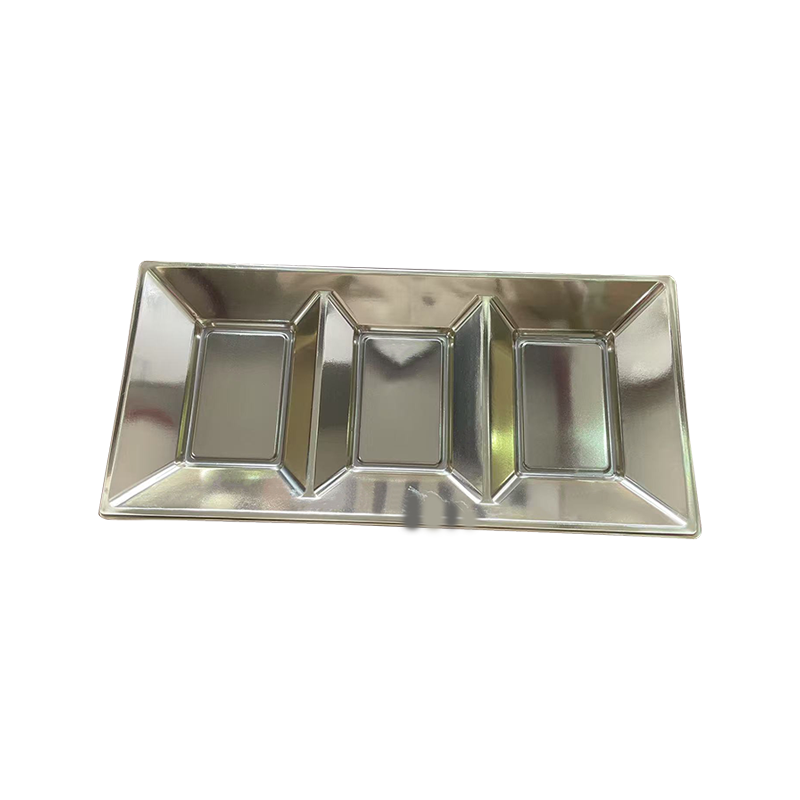 Silver Plastic 3-Grid Snack TrayThree separated compartments prevent food mixing, ideal for buffets, parties, or cold cuts. The optimized grid depth keeps items stable, and the silver finish adds a celebratory touch to catering presentations.View Product →
Hot Takeaway and Catering
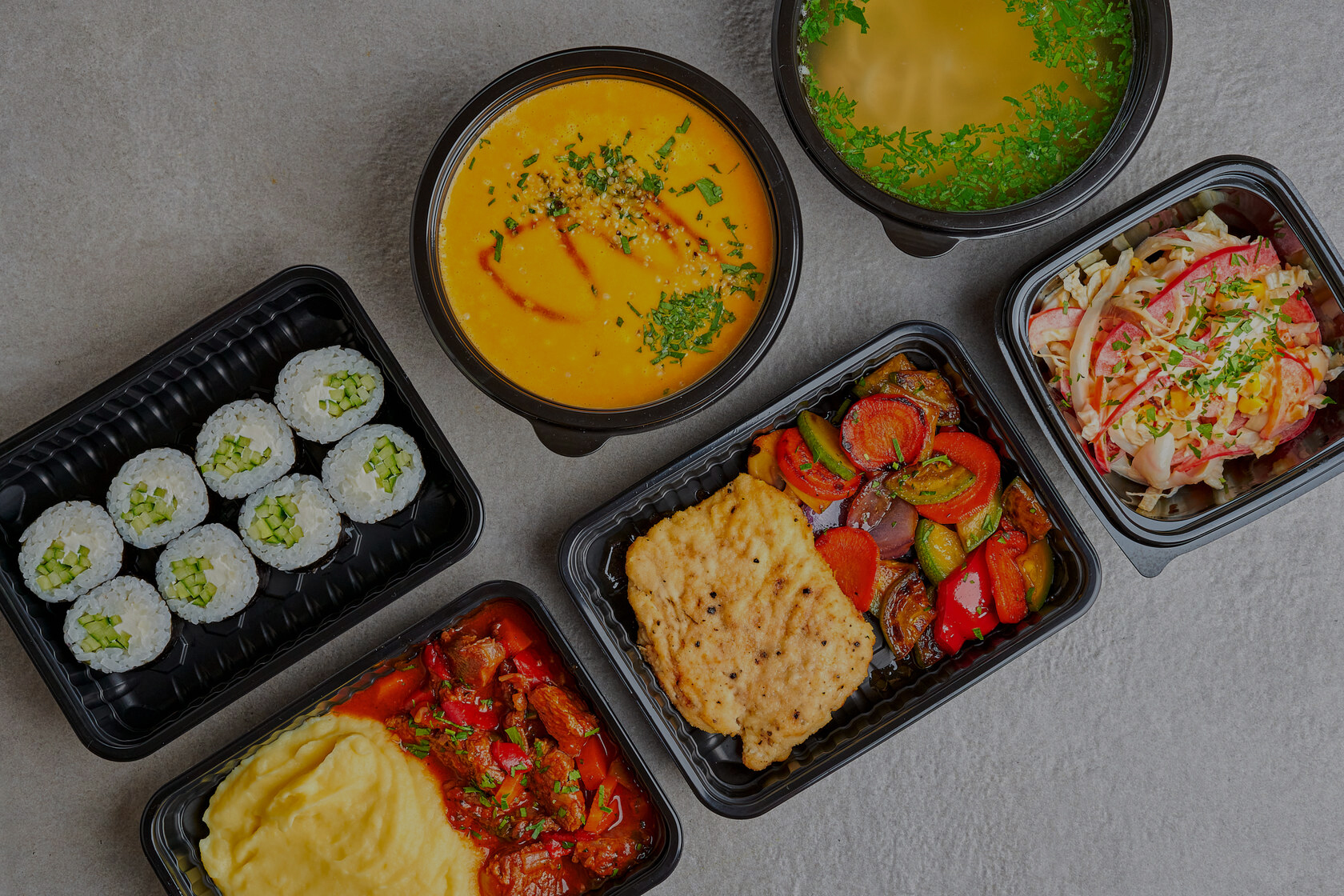
For hot and greasy food, PP is the workhorse. Square PP trays with anti-overflow lids suit saucy dishes, curry, noodles and braised mains that often defeated round containers. The flat walls give the lid a longer seal line, which directly reduces the leak incidents that damage delivery ratings.
Five Things to Verify Before You Commit to a Square Tray
Not all square trays are equal. The difference between a tray that holds up across the supply chain and one that fails at the worst moment is usually hidden in the specifications. Run through these five checks before ordering.
- Wall thickness. Gauge is the first cost lever. Thin trays flex, crack at the corners and feel cheap in the hand; thicker trays survive cold-chain swings and stacking pressure.
- Material grade. Confirm the sheet is food-contact grade and ask whether the formulation includes recycled content, which can alter clarity and temperature tolerance.
- Temperature tolerance. Match the material to the full journey of the product — a tray that looks great in the chiller may not survive a microwave or a heat lamp.
- Stacking and nesting. Empty trays must nest tightly for storage, while filled trays must stack without the base of one collapsing onto the product below.
- Closure performance. Hinged lids, separate lids and anti-fog films behave differently under vibration and temperature change; test them with your actual product, not just with water.
Factory-Direct Sourcing: What Changes When You Buy from the Molder
When you source square trays from a thermoforming factory rather than a trading intermediary, the practical difference is not simply price per piece. It is the ability to own the tooling conversation. Square trays are one of the most mold-friendly formats in the packaging catalog: wall taper, corner radius, stacking ribs, bead edges and compartment layout are all decided in the tool before the first tray is formed.
At Donghang Polymer Material Technology, that conversation starts with a team that combines sales, R&D and production under one roof. For a bakery chain, it can mean changing one cavity in an eight-cavity tool to add a crimped edge. For a ready-to-eat brand, it can mean custom gold or silver finishes that set the tray apart on a supermarket shelf. The same tooling route also covers accessories such as domed lids, anti-fog covers and custom inserts.
If you are evaluating suppliers, look beyond the catalog. A direct factory can produce pilot runs from a modified tool, respond quickly on lead time, and hold spare tooling components for repairs. Browse the range we produce across PET, PP and PS plastic food trays to see how far the square format extends, from clear pastry bases to gold presentation plates.
The Bottom Line on Square Trays
Square plastic food trays earn their popularity in the places nobody photographs: the cooler, the delivery box, the packaging station. They pack more units per shelf, make portioning consistent and, when matched to the right material, survive the temperature swings that food service throws at them every day.
Start with the material. Cold and transparent goes PET; hot and reheatable goes PP; short-cycle cold service goes PS. Verify wall thickness, test the closure with your real product, and if you plan to scale, keep the mold route open. A tray that stacks well, seals well and arrives intact is not a commodity. It is quietly one of the most important investments a food business makes.


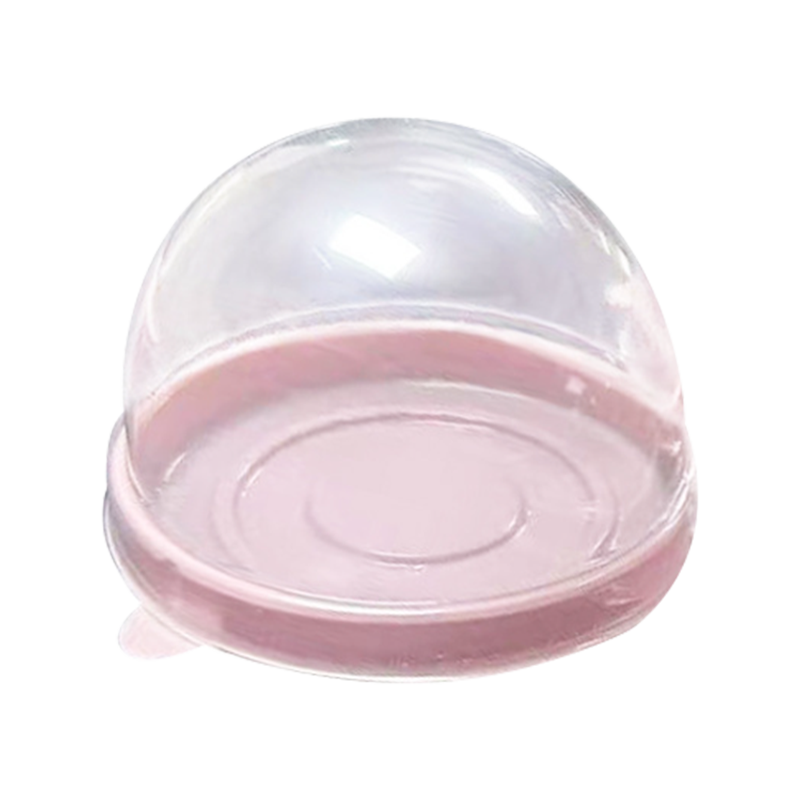



- The company requires rigorous, using a high starting point, trustworthy, quality, and actively develop and innovate, the pursuit of excellence route!
CONTACT US
- Tel: +86-15026677788
- E-mail: [email protected]
- Add: No.11 Huafeng Road, Anhua Community, Anhua Town, Zhuji City, Shaoxing, Zhejiang, China
GET A QUOTE
Copyright @ Donghang Polymer Material Technology Co., Ltd. All Rights Reserved.
 Custom PVC Blister Plastic Boxes Manufacturers
