


 English
 عربى
عربى Español
Plastic Tray Food Packaging: Materials, Selection Guide & Supplier Tips
When a bakery launches a new cheesecake line or a meal-prep kitchen starts packing hot entrees for delivery, the tray becomes part of the product itself. Plastic tray food packaging influences shelf appeal, food safety, portion control, and unit cost. The right tray reduces returns, prevents leaks, and reinforces a brand's quality promise. The wrong one creates condensation, breakage, and customer complaints.
The conclusion up front: there is no single best tray. There is only the tray that matches your food's temperature, moisture, display needs, and handling requirements, supported by a supplier that can hold consistent quality from one batch to the next.
Material First: How PET, PP, and PS Shape Packaging Performance
Material is the first decision because it sets the limits for temperature, clarity, and cost. The three most common thermoplastics in food tray production are PET, PP, and PS, and each serves a different operational profile.
PET is the choice when the customer's first impression depends on seeing the food clearly. It offers high transparency, good rigidity, and enough strength for vacuum-formed trays, hinged lids, and folding boxes. PET performs well under refrigerated transport without becoming brittle, which is why it dominates cold salads, cakes, sushi platters, and fruit displays. It is not designed for prolonged high heat, so keep it in cold-chain and ambient display applications.
PP is the workhorse for food that moves between freezer and microwave. It tolerates low-temperature storage, withstands typical reheating temperatures, and resists oil and grease well. PP also provides better chemical resistance and fatigue strength, which makes hinged lids reliable through repeated opening and closing. Frozen food trays, takeaway lunch boxes, and many baked goods containers rely on PP for exactly this reason. For more on its mechanical profile, see this detailed analysis of PP plastic food tray material characteristics.
PS remains a cost-effective option for lightweight, single-service needs. Its clarity is decent, though impact resistance is lower than PET. PS trays suit high-volume, low-cost settings such as deli counters, bake sales, and catering events where the packaging is used once and discarded.
| Property | PET | PP | PS |
|---|---|---|---|
| Best suited for | Cold and ambient display | Freezer-to-microwave cycles | Lightweight single service |
| Clarity | High transparency | Translucent to opaque | Good clarity, lower impact strength |
| Typical tray uses | Pastry trays, sushi platters | Frozen food trays, hot takeaway | Salad bars, catering trays |
Within each material family, gauge and structure change performance further. A 0.3 mm tray and a 0.6 mm tray from the same sheet can behave very differently under load, which is why evaluating the actual product sheet and its intended use matters more than comparing material names alone. Before choosing a specific product, confirm these specification points with your supplier:
- Sheet gauge and thickness tolerance across the tray surface
- Food-contact certification for the raw material
- Temperature limits for the finished container under real handling conditions
Design Details That Separate Good Packaging from Problem Packaging
Once the material is fixed, design features decide whether the tray solves practical problems or creates new ones. Three details deserve special attention in food packaging.
Anti-Fog Covers Keep Cold Food Presentable
Condensation is one of the most common complaints in chilled packaging. When a salad or sushi box moves from a cold prep room to a warmer display counter, moisture forms on the lid and hides the product. Anti-fog surface treatments reduce droplet formation and keep the tray transparent. For retailers, this is a merchandising issue as much as a quality issue, because shoppers judge freshness by what they can see.
Anti-Overflow and Microwave-Ready Designs Handle Hot Takeaway
Heat and moisture push liquid out of poorly sealed containers. Trays with anti-overflow lids and secure closures prevent sauce from leaking into delivery bags. When the tray uses a microwave-tolerant material such as PP, the same package can carry the meal, store leftovers, and reheat the food without transferring it to another dish.
Compartments and Structural Ribs Support Portion Control
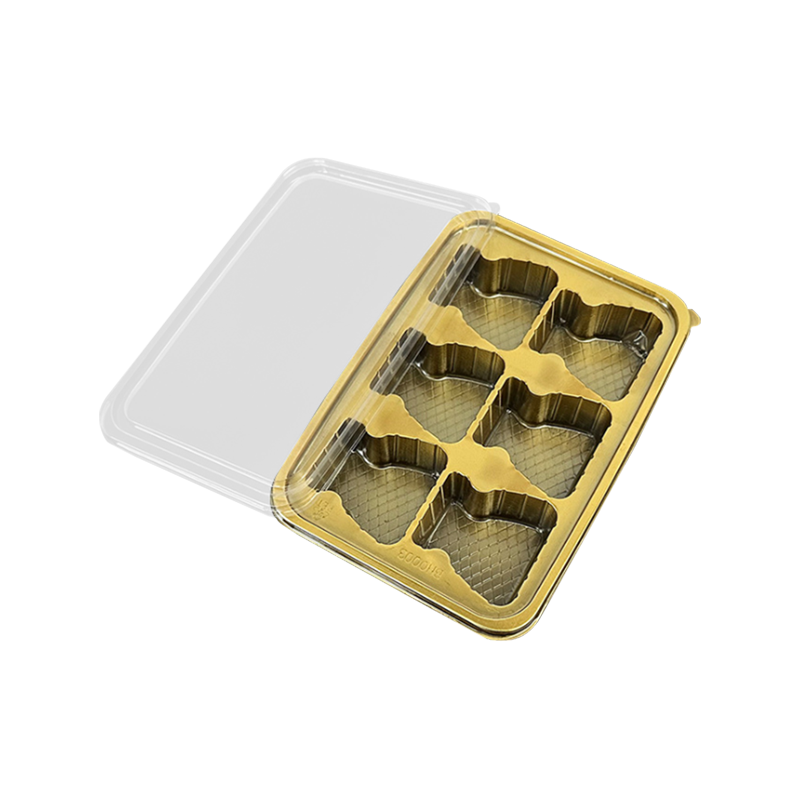
Multi-compartment trays separate sauces from dry food, control portion size, and let operators offer several items in a single pack. Structural ribs under the base add rigidity, preventing the tray from sagging under the weight of a decorated cake or a platter of sashimi. Rib depth and placement also affect stacking strength during transport, so they deserve the same scrutiny as the tray's visual appearance.
Matching Plastic Trays to Real Food Operations
Different food categories place different demands on packaging. The following scenarios show how material and design choices come together in practice.
Bakery and Pastry
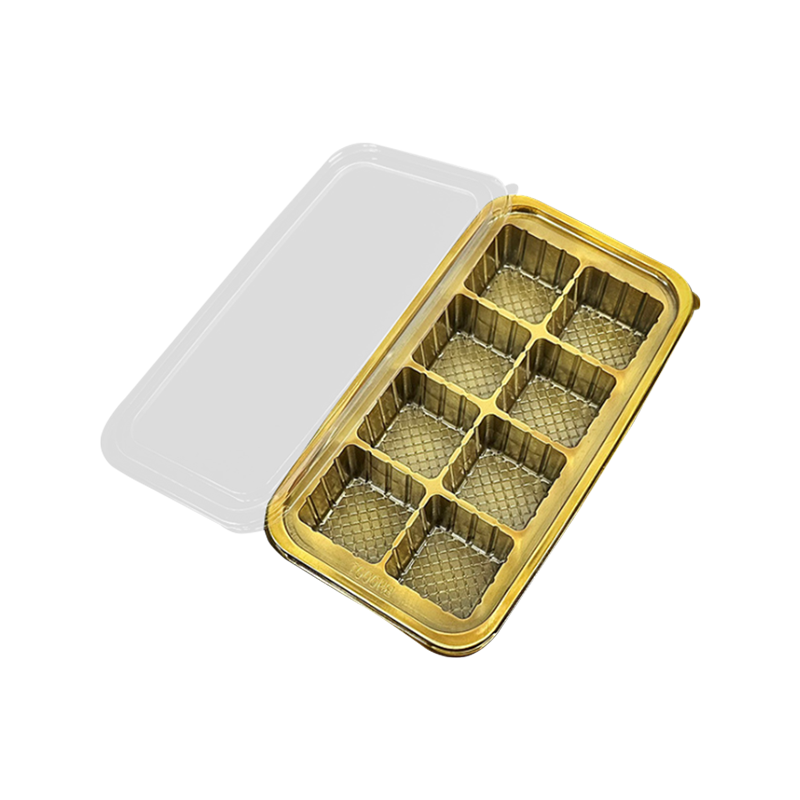
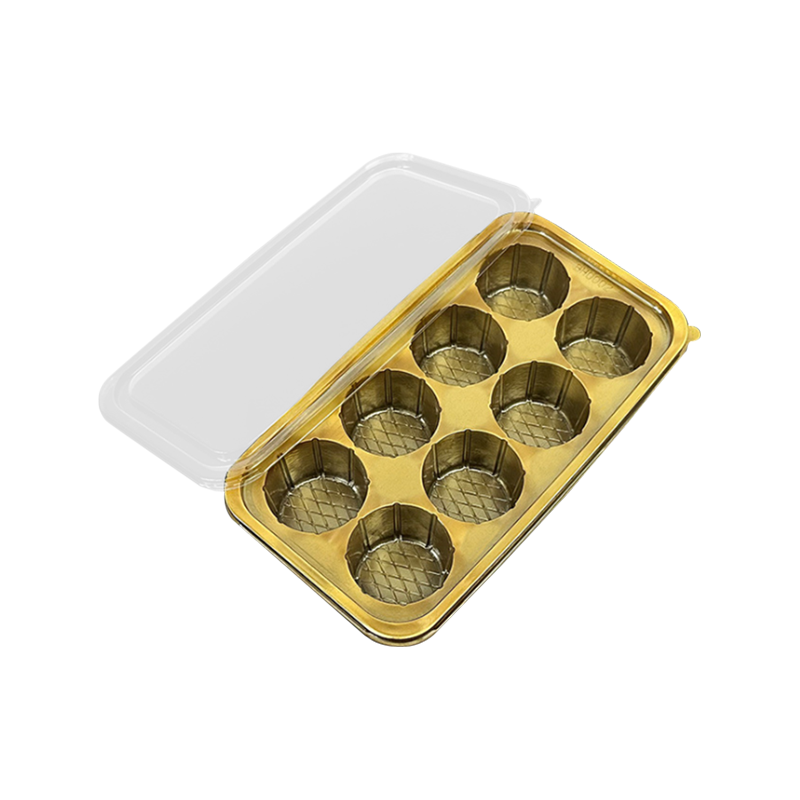
Cakes, cheesecakes, and pastries need protection for the surface while showing the craftsmanship. A transparent PET tray with a flat base and sufficient wall height keeps frosting intact and prevents the lid from touching the product. The clear PET pastry tray is a practical example: its thicker wall resists flexing under the weight of a whole cake, and the transparency makes the product the visual hero.
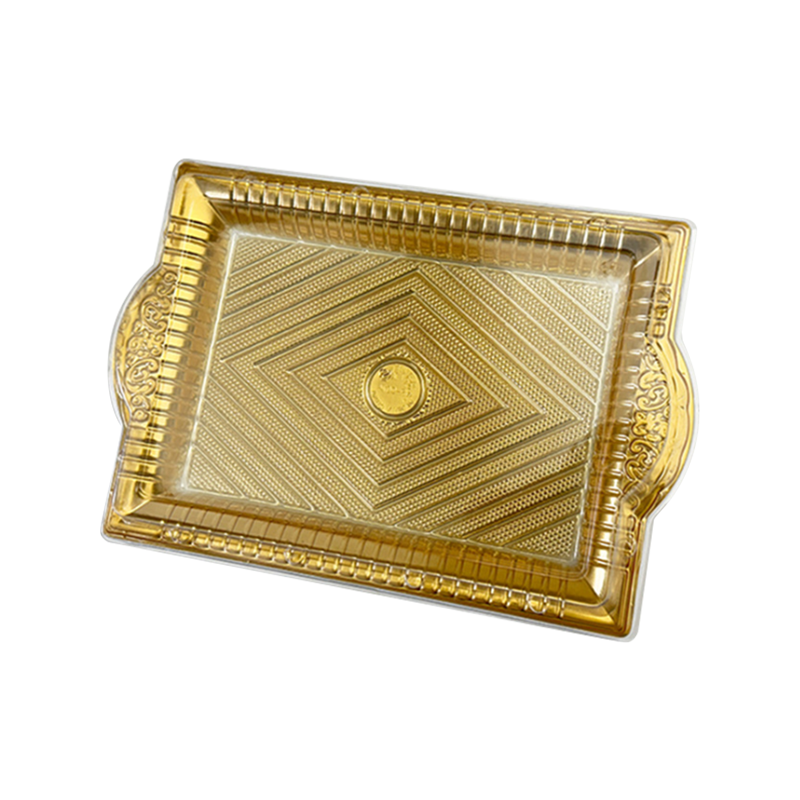 Wholesale Disposable transparent thick pastry tray Suppliers, Factory - DonghangDonghang Polymer Material Technology Co., Ltd is China Disposable transparent thick pastry tray suppliers and factory,Disposable transpar...View Product →
Sushi and Sashimi
Sushi is sold on appearance. The customer looks through the package to judge freshness, arrangement, and portion size. Trays with separate wells hold pieces apart, while drop-in lids let the product sit close to the packaging surface for an unobstructed view. Black bases with transparent covers create a premium contrast that works well for both dine-in display and delivery.
Frozen and Takeaway Meals
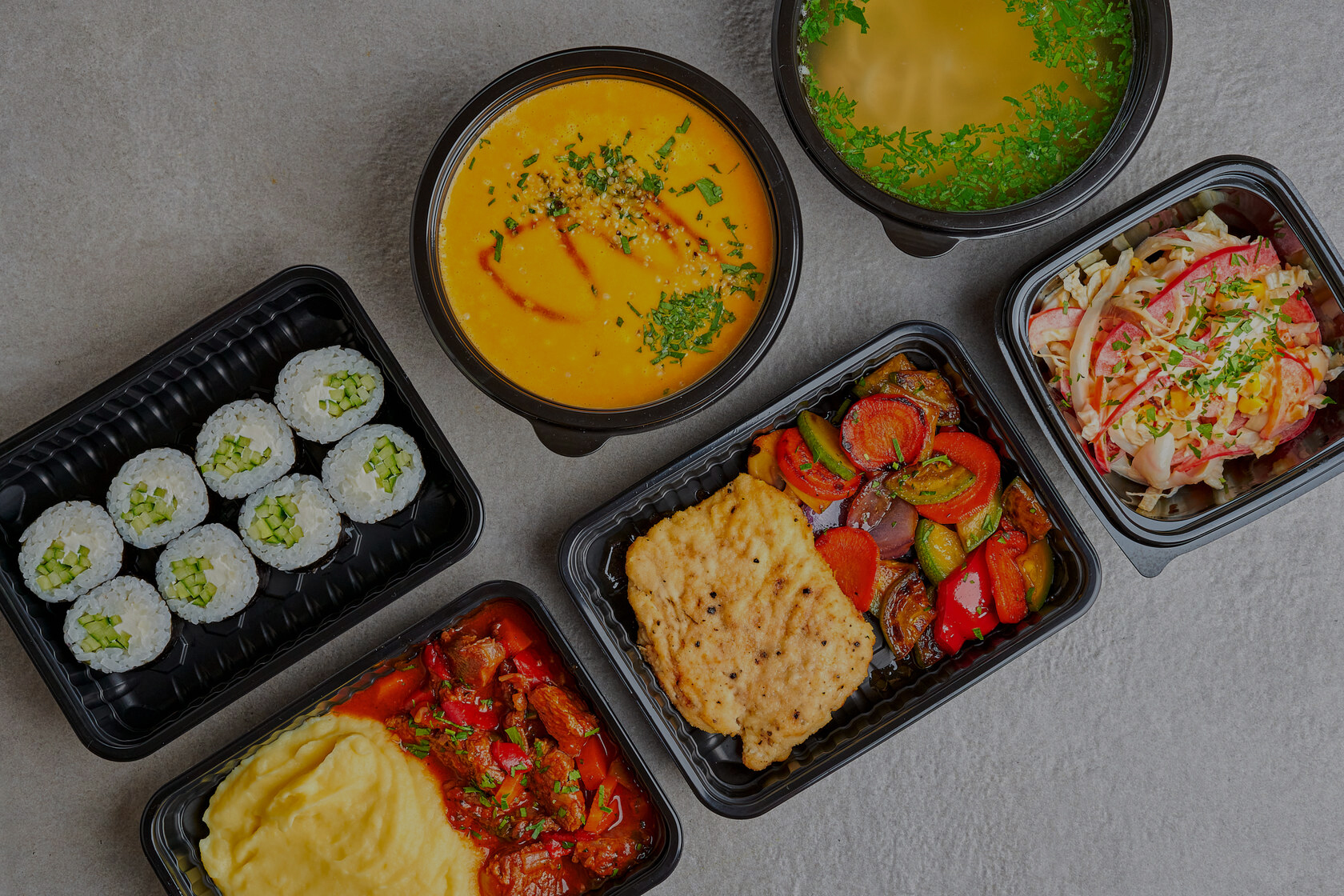
Frozen entrees and meal-prep boxes must survive low-temperature storage and then face heat during reheating. PP-based trays tolerate this temperature swing without cracking. Vacuum-formed trays also protect portioned items by keeping the film tight against the food, which reduces freezer burn and extends shelf life. If you are sourcing for this category, the PP frozen food packaging tray checks both the cold-chain and reheating requirements in a single package.
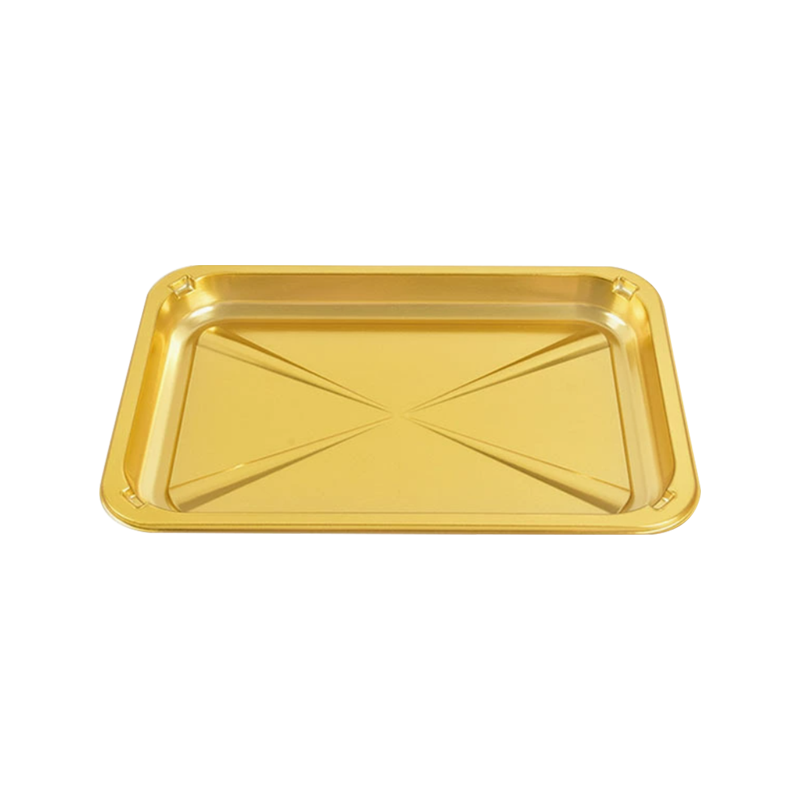 Wholesale Disposable frozen food packaging tray Suppliers, Factory - Donghang PoDonghang Polymer Material Technology Co., Ltd is China Disposable frozen food packaging tray suppliers and factory,Disposable frozen food...View Product →
Salads and Fresh Produce
Cold salads present the same anti-fog challenge as sushi, along with the need for a simple format that can be opened and reclosed at retail. The tray needs enough internal height to hold leafy greens without crushing them and a cover that stays transparent from the pack house to the consumer's fridge. A salad packaging box with anti-fog cover combines these features in one format, which is why it is frequently specified for supermarket prepared-food counters.
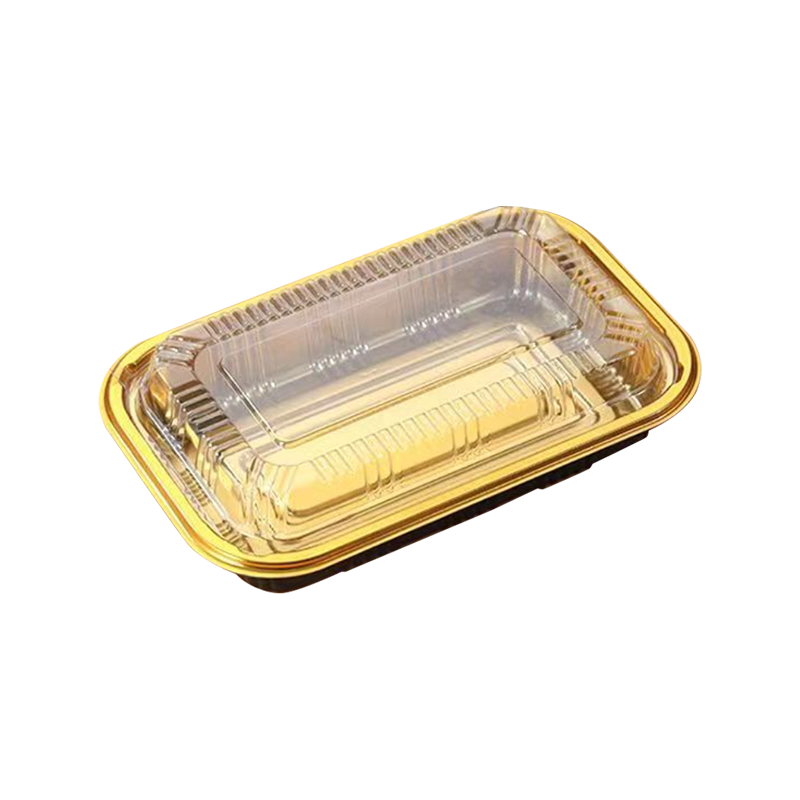 Wholesale Disposable salad food packaging box with anti fog cover Suppliers, FacDonghang Polymer Material Technology Co., Ltd is China Disposable salad food packaging box with anti fog cover suppliers and factory,The ...View Product →
Beyond these categories, the plastic food tray range covers additional shapes, gauges, and compartment patterns that can be matched to your specific product line.
What to Evaluate When Choosing a Plastic Tray Supplier
The tray specifications are only half the equation. Supplier capability determines whether you actually receive those specifications consistently.
Mold Design and Customization
Food brands increasingly need custom cavities, logo embossing, or specific compartment patterns. A supplier that designs molds in-house can turn a concept into tooling faster and usually at lower cost than a trader who outsources every step. Ask whether the factory can handle design iterations, prototype samples, and small production runs before full scale-up.
Quality Control and Consistency
Thickness variation across a production batch is a common hidden problem. If the tray bottom thins out, the tray flexes and food shifts during transport. A reliable supplier weighs and gauges samples from each batch, and checks dimensional tolerances against the original drawings. For food-contact packaging, also confirm that raw materials are food-grade and that the factory follows documented hygiene procedures.
Order Size and Lead Time
Minimum order quantities vary widely between tray designs. Custom tooling often requires higher volumes to amortize mold costs, while standard trays can be supplied in smaller lots. Clarify lead time during seasonal peaks as well, since bakery and catering demand rises sharply before major holidays and a two-week delay can miss an entire sales window. The full disposable food tableware packaging line shows how many standard options are available without custom tooling.
Plastic tray food packaging performs best when the selection process starts with the food itself: its temperature, moisture, display needs, and handling requirements. Once those are clear, the material choice narrows, design features become specifiable, and supplier conversations turn more productive. Work with a factory that can show you real trays, real tolerances, and the production data behind them. That is the most reliable way to get packaging that protects both your product and your profit margin.





- The company requires rigorous, using a high starting point, trustworthy, quality, and actively develop and innovate, the pursuit of excellence route!
CONTACT US
- Tel: +86-15026677788
- E-mail: [email protected]
- Add: No.11 Huafeng Road, Anhua Community, Anhua Town, Zhuji City, Shaoxing, Zhejiang, China
GET A QUOTE
Copyright @ Donghang Polymer Material Technology Co., Ltd. All Rights Reserved.
 Custom PVC Blister Plastic Boxes Manufacturers
