


 English
 عربى
عربى Español
How do plastic food trays differ in terms of material composition (PET, PP, PS, PVC)?
Materials & Packaging
The Anatomy of a Plastic Food Tray
A closer look at how PET, PP, PS, and PVC shape the way food is presented, protected, and preserved — and why the resin behind a tray matters more than its shape.
Every plastic food tray begins its life as a decision about resin. Long before a tray takes shape on a production line, its material has already determined how it will behave under heat, how it will look on a shelf, and how it will end its life after use. PET trays offer the best clarity and recyclability, PP trays handle heat and repeated use the best, PS trays are the lightest and least expensive, and PVC trays provide strong barrier protection but face the most restrictions in direct food contact.
What follows is not a technical data sheet — it is a way of reading these four materials the way a designer reads fabric, or a chef reads cuts of meat: by what they are suited for, and by what they quietly give up in exchange.
PET — Clarity as a Design Choice
PET is the material of visibility. Its near-glass transparency is why so many plastic food platters used for bakery counters, fruit packs, and produce displays are built from it — the product inside becomes its own advertisement, no packaging copy required.
Clarity is not a cosmetic feature. It is the difference between a tray that hides a product and one that presents it.
PET carries genuine strength-to-thickness efficiency, allowing thinner walls without losing structural integrity during stacking or transit. Its ceiling, however, is heat: PET begins to soften between 150°F and 160°F, ruling it out for ovens or sustained microwave use. What it lacks in heat tolerance, it recovers in circularity — PET is the most widely recycled plastic resin in municipal systems, carrying resin code #1 and a genuinely functional path back into the supply chain.
PP — Built for Heat, Built for Reuse
Where PET yields to temperature, polypropylene holds its shape. PP remains stable across roughly -4°F to 250°F, which is why it has become the default material for microwaveable meals, hot food service trays, and containers meant to be washed and reused rather than discarded.
This resilience comes with a trade: PP is translucent rather than transparent, trading a measure of visual polish for durability under stress. For applications where performance under heat matters more than shelf appeal, this is rarely a difficult trade to accept.
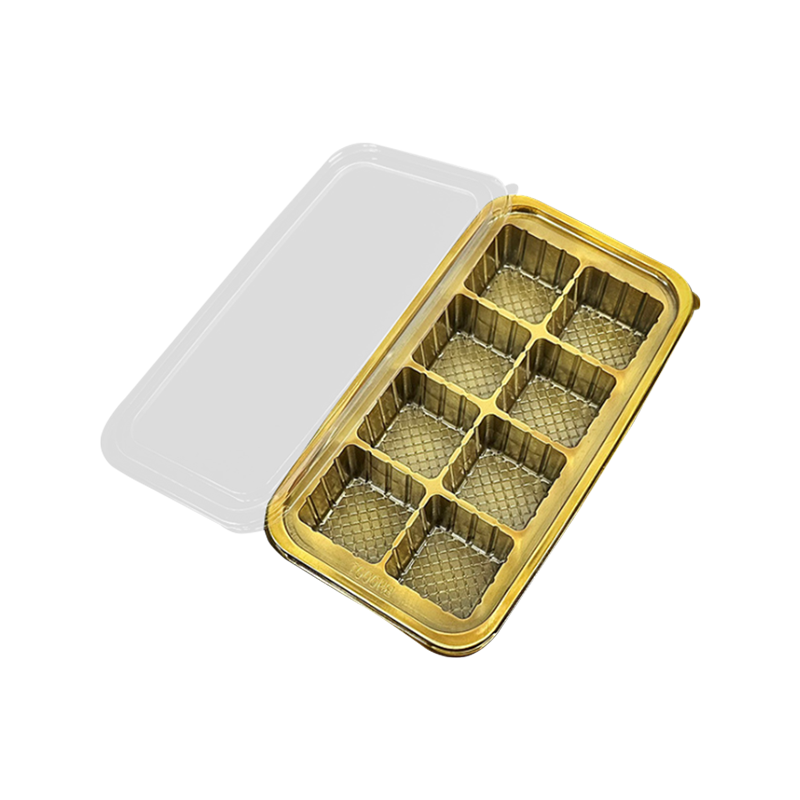
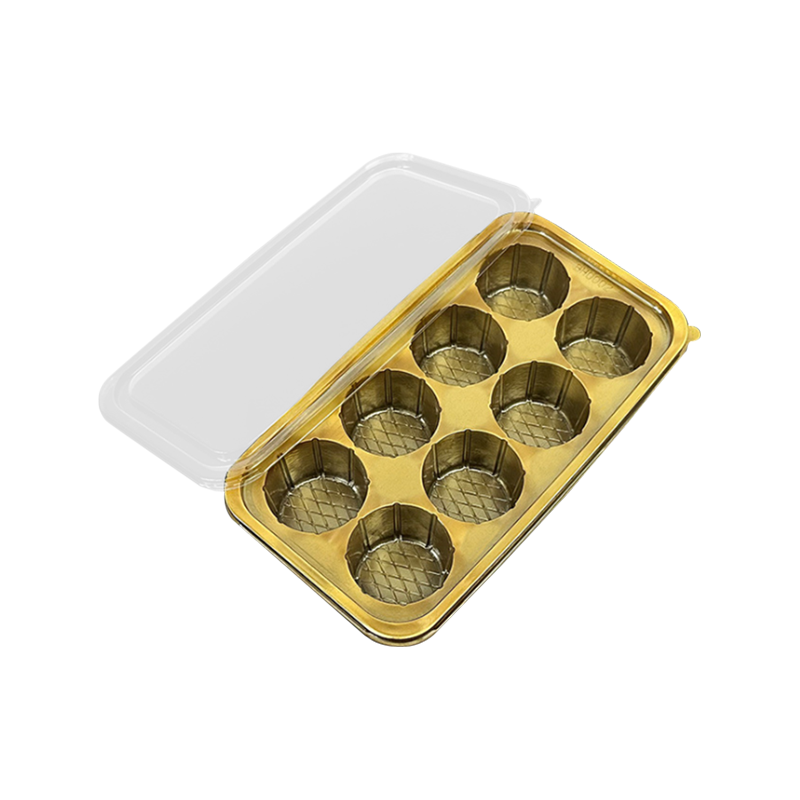
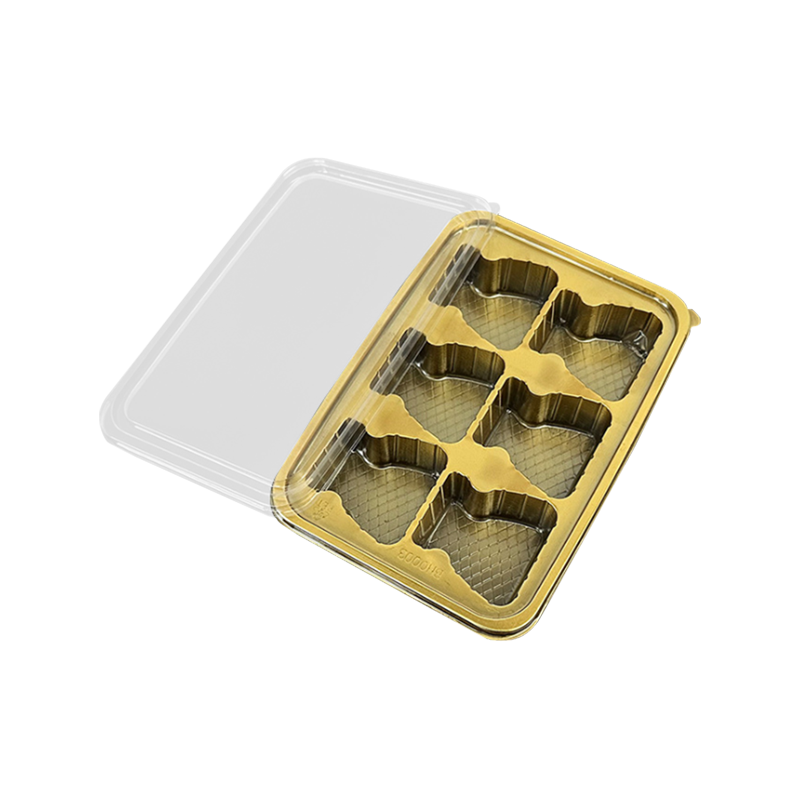
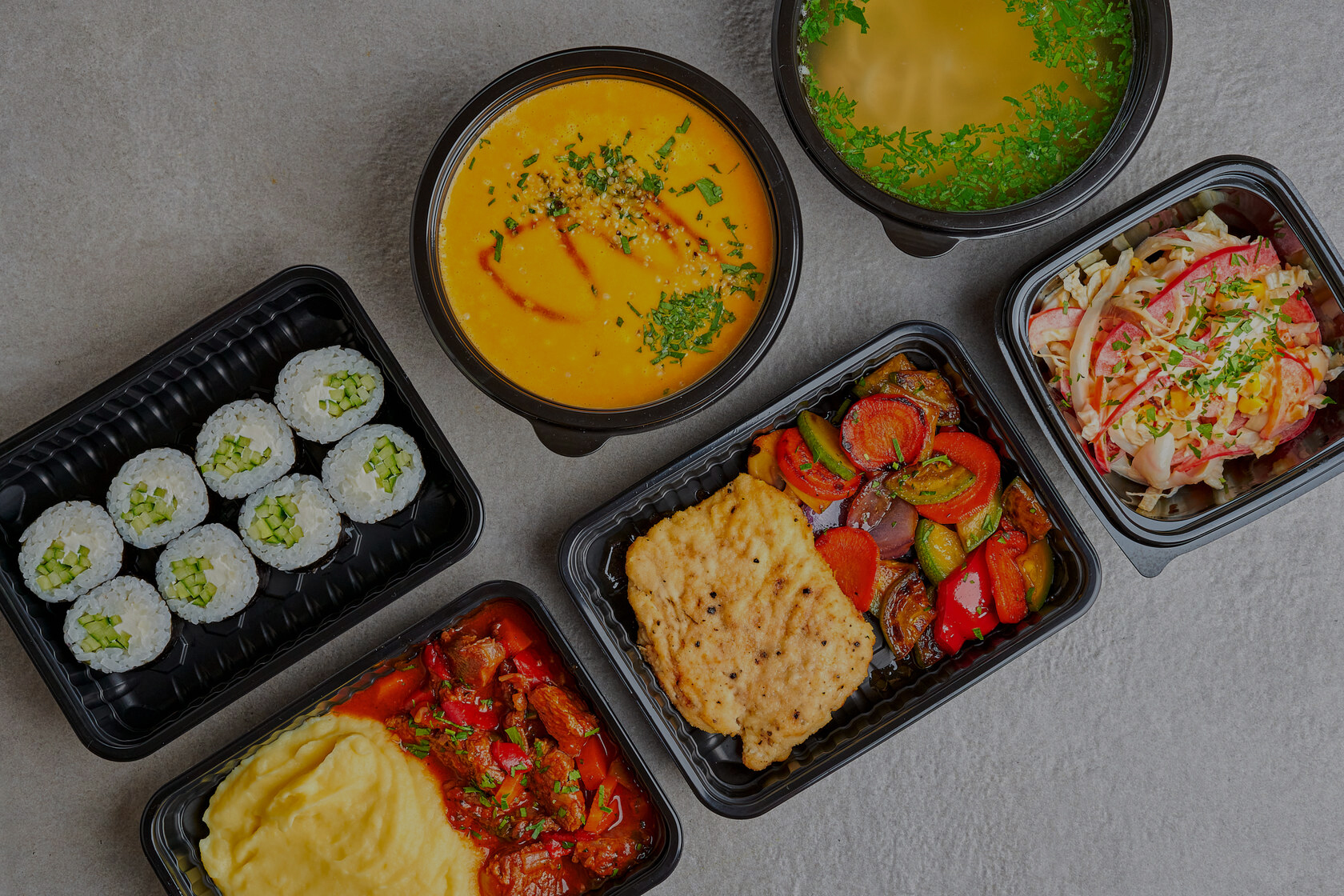
plastic food tray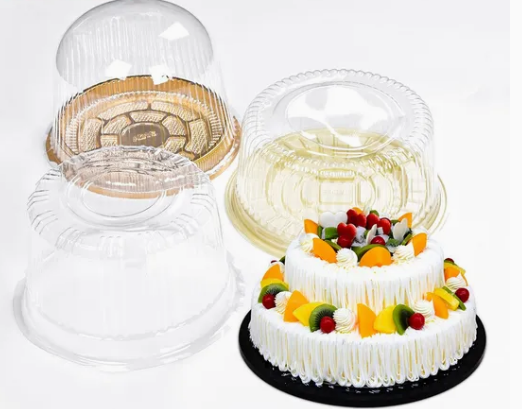
PS — Lightness, at a Cost
Polystyrene exists in two personalities: rigid PS, glossy and easily printed, and expanded foam PS, light and cushioning. Together they define the economics end of the tray spectrum. Rigid PS is the quiet workhorse behind many plastic bakery trays, chosen for how cleanly it holds shape and takes color at room temperature.
Handle With Care
PS is brittle rather than flexible — it cracks under stress instead of bending — and softens near 175°F. It was never designed for the oven, and prolonged microwave use should be avoided.
PVC — Barrier Strength, Narrowing Role
PVC's presence in food trays has always been narrower than the other three, reserved for blister packaging and select barrier-critical applications such as cheese and cold cut trays. Its strength lies in moisture and gas resistance — few resins seal a product from the outside world as effectively.
Regulatory Note
PVC requires plasticizers to remain flexible, and food-contact regulations closely restrict which additives are permitted. Many regions have tightened these rules, pushing manufacturers toward PET and PP alternatives for fresh and ready-to-eat food.
Reading the Materials Side by Side
| Resin | Heat Tolerance | Clarity | Recyclability | Common Use |
|---|---|---|---|---|
| PET | Low–Moderate | High | High | Bakery, produce, deli platters |
| PP | High | Moderate | Moderate | Microwaveable meals, reusable trays |
| PS | Low | High / Opaque | Low | Bakery trays, meat and produce trays |
| PVC | Low | Moderate–High | Very Low | Blister packs, select cold packaging |
Choosing by Function, Not by Habit
The right material follows the tray's job, not the other way around.
- Hot food or microwave use — PP, for its heat stability.
- Visibility-driven retail, like fruit or bakery displays — PET, for optical clarity.
- Short shelf-life, cost-sensitive runs — PS, the most economical rigid option.
- Barrier-critical, limited-contact packaging — PVC, where local regulation permits.
- Sustainability-forward branding — PET and PP, both with functioning recycling paths.
Sourcing Tip
Request food-contact certifications directly from suppliers. Resin grade and additive packages vary even within the same base polymer, which can quietly shift both heat performance and recyclability.
In Closing
There is no single best material — only the best material for the job at hand. PET for presence, PP for endurance, PS for economy, PVC for barrier strength in the few places it still belongs. Understanding the resin behind the tray is understanding the tray itself.



- The company requires rigorous, using a high starting point, trustworthy, quality, and actively develop and innovate, the pursuit of excellence route!
CONTACT US
- Tel: +86-15026677788
- E-mail: [email protected]
- Add: No.11 Huafeng Road, Anhua Community, Anhua Town, Zhuji City, Shaoxing, Zhejiang, China
GET A QUOTE
Copyright @ Donghang Polymer Material Technology Co., Ltd. All Rights Reserved.
 Custom PVC Blister Plastic Boxes Manufacturers
