Plastic See Through Food Tray: How Clarity, Material and Heat Decide the Result
Two trays can look identical on a sample table and behave completely differently in a chilled display. The difference is polymer chemistry, wall thickness and lid design, not price.
A buyer asks three suppliers for clear trays for a 300 g portion of cold cuts. Three samples arrive. One is glass-clear with a mirror gloss, one looks faintly milky, and one carries a slight blue tint and a rough cut edge. All three are sold as see-through plastic food trays. Only one will still look right after four hours under a display lamp, and only one will survive a warm filling without crazing at the corners.
The conclusion first: the polymer you choose, whether APET, PP, PS or PVC, sets the ceiling on clarity, heat resistance and cost long before the mold design does. Choose the material from the filling temperature, the fat and acid content of the food, and the way the tray is closed. Only then refine the shape.
What See Through Actually Measures
See-through is not a finish applied at the end of production. Four variables move it: the crystallinity of the polymer, the wall thickness after forming, the polish of the mold surface and the cooling profile during thermoforming. Change any one of them and the tray changes appearance, even when the sheet comes from the same supplier.
Amorphous versus semi-crystalline polymers
APET and PVC are amorphous, so light passes through without scattering and the tray reads as glass. PP is semi-crystalline: unless a clarified grade is used, the crystals scatter light and the tray looks hazy at the same thickness. PS sits between the two, bright and glossy in thin sections but brittle when cold.
Thicker walls are not clearer
Clarity often peaks at a mid-range gauge and then falls, because a heavier sheet cools more slowly and traps internal haze. A 0.4 mm APET tray frequently looks cleaner than a 0.8 mm tray formed from the same material. When clarity is the complaint, test two or three thicknesses rather than one.
Where transparency pays, and where it does not
Clarity earns money in a pastry case, at a sushi counter and on a fruit or salad display, where the product itself is the argument. In frozen storage and industrial packaging, translucency is usually enough. Paying for optical clarity on a tray that never leaves a freezer box is avoidable cost.
Clarity is set in the first seconds of forming. No amount of inspection afterwards can put it back.
PET, PP, PS and PVC Compared
Typical behaviour of the four polymers most often thermoformed into see-through food trays; the values describe common commercial sheet rather than guaranteed limits.
| Material |
Clarity |
Heat and microwave |
Typical filling |
Watch-outs |
| APET |
Highest; glass-like with strong gloss |
Up to roughly 60 to 70 C; not microwave safe |
Pastry, dessert, sushi, fruit, cold deli |
Softens with heat; heavy loads need a thicker base or a supporting tray |
| PP |
Translucent to hazy; clarified grades improve it |
Microwave safe, well above 100 C |
Hot meals, lunch boxes, frozen ready meals |
Lower gloss and clarity; haze grows with wall thickness |
| PS and OPS |
Bright gloss, very clear in thin walls |
Low; not microwave safe |
Candy, chocolate, cold desserts |
Brittle; cracks at low temperature and at thin corners |
| PVC |
Very clear with good forming drape |
Moderate |
Cold display items |
Regulatory and disposal pressure in several markets |
The practical reading: for a cold display where the food has to sell itself, APET and PS are the natural starting points. For anything that will be reheated, PP is the honest answer, and the haze is a fair price for it. PP forms differently and behaves differently in end use, so a closer analysis of PP food tray materials is worth reading before the specification is fixed.
APET also draws into deeper cavities more predictably than PS, which is why most see-through bakery and cold-display trays in the PET plastic food tray family are made from it.
Where a See-Through Tray Earns Its Cost
Bakery and patisserie
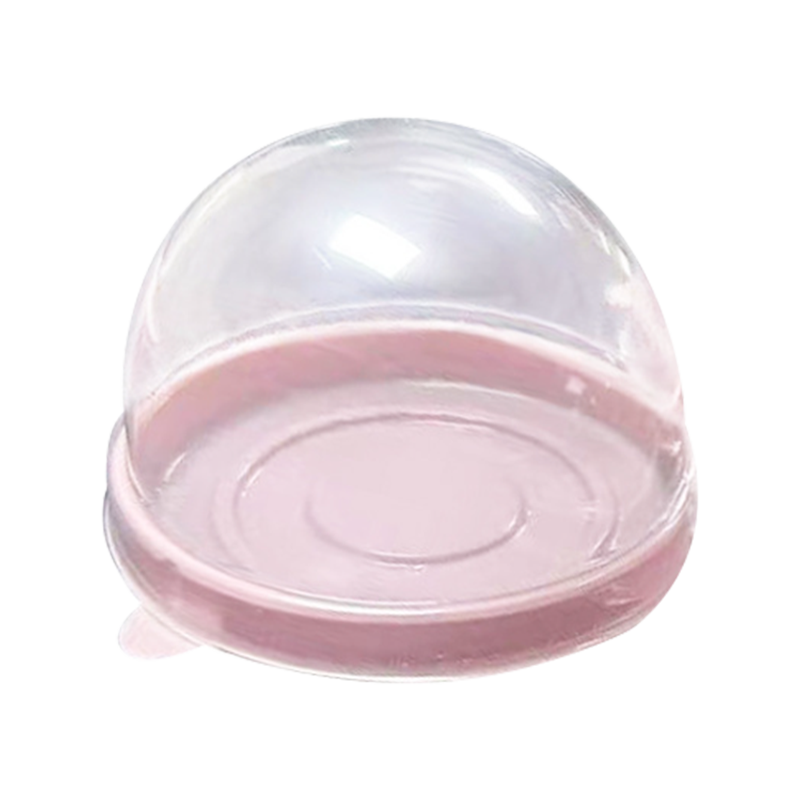
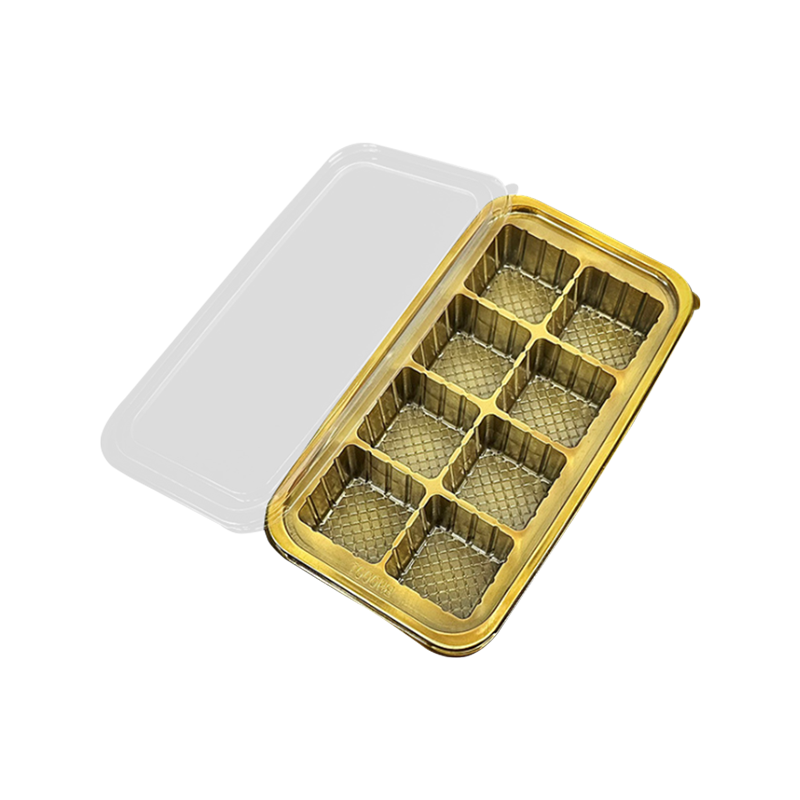
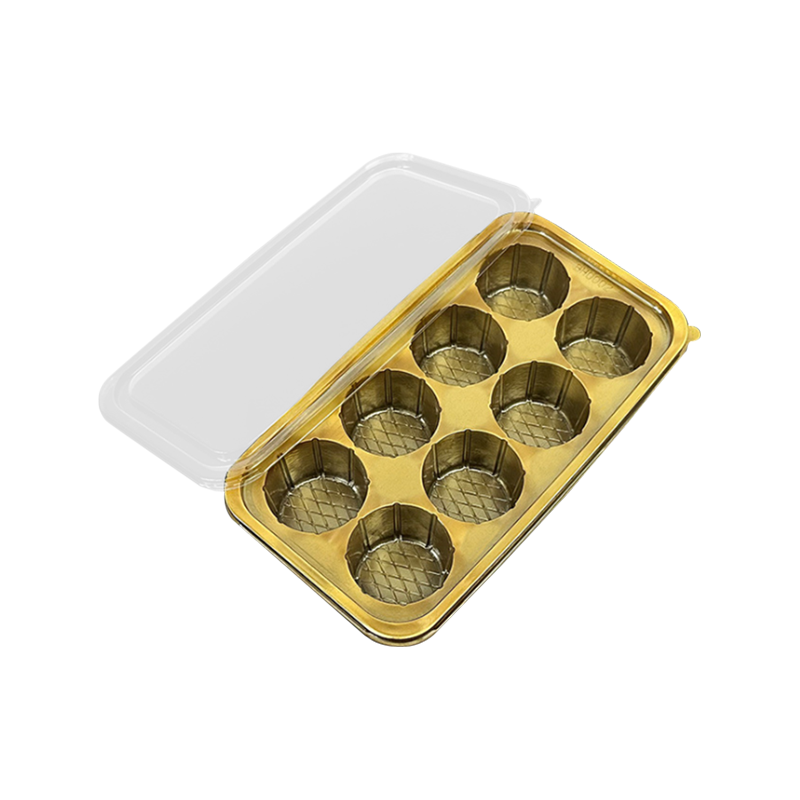
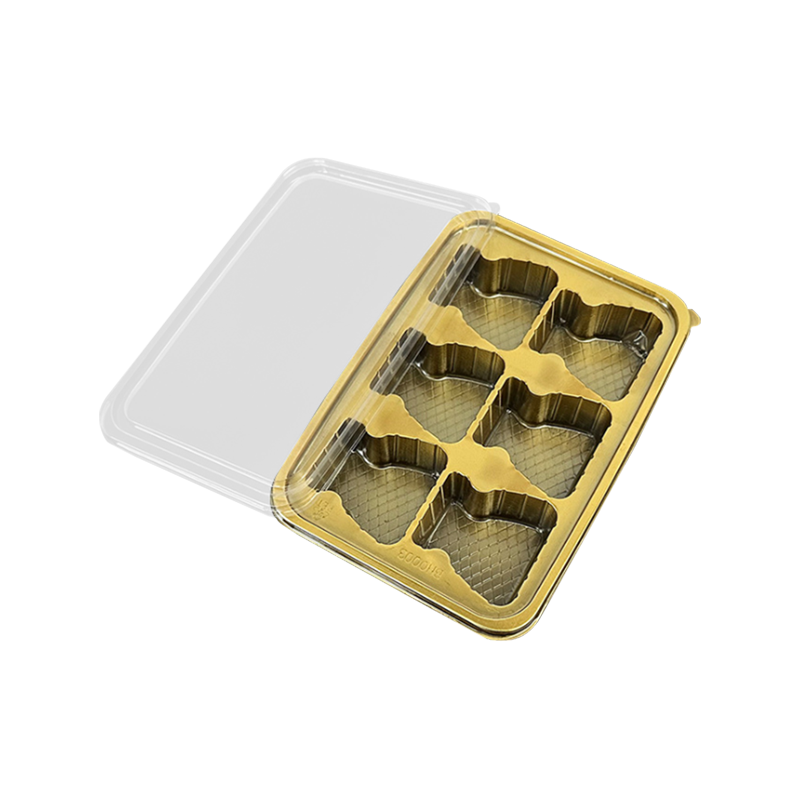
In a dessert case the packaging is part of the merchandising. A clear APET tray with a dome or hinged lid lets a customer judge the glaze, the crumb and the fruit before buying. The usual failure is structural rather than optical: a base thin enough to flex when the tray is lifted, or a lid that opens inside a paper bag.
Sushi, sashimi and ready-to-eat
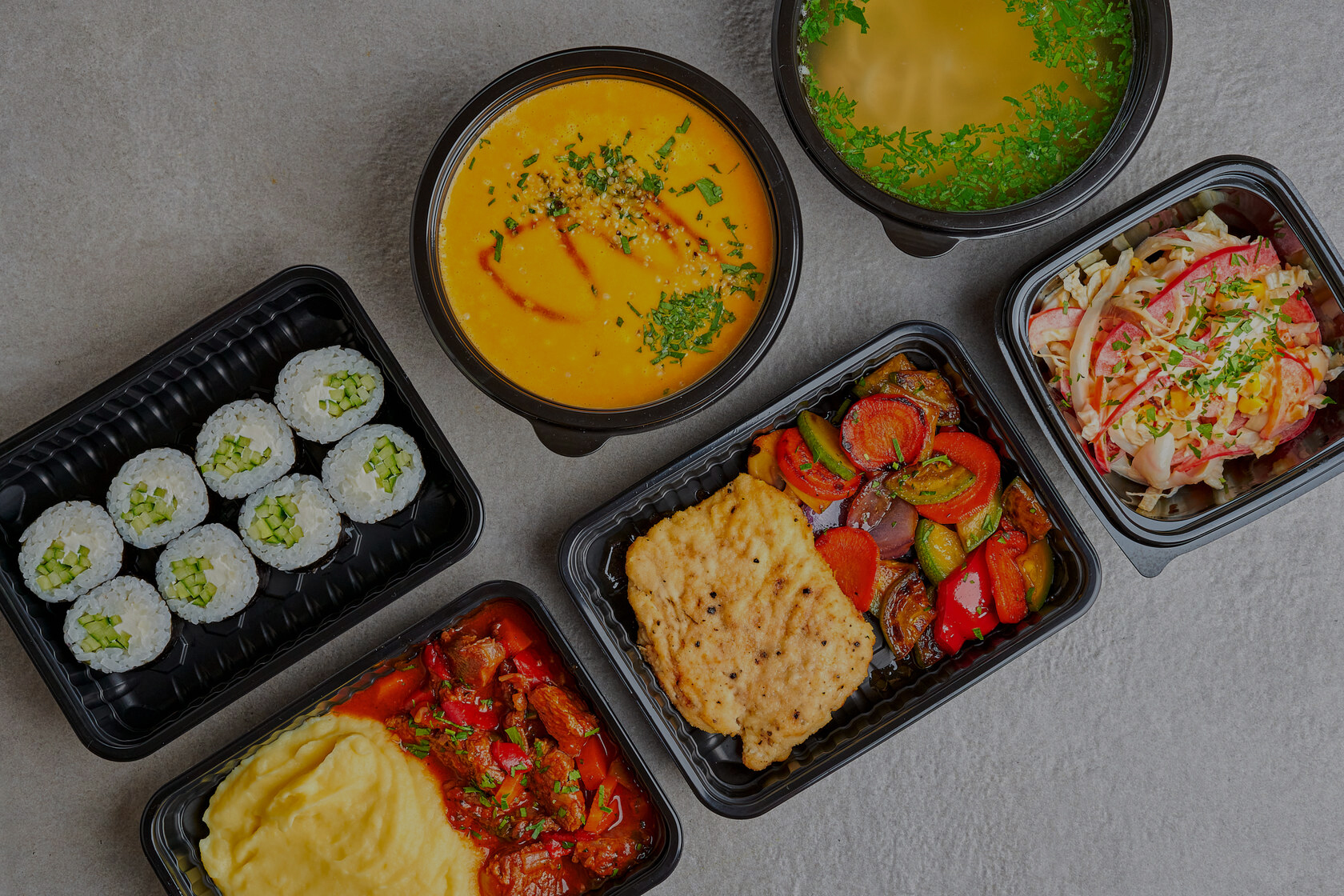
Japanese-style trays pair a black or printed base with a clear lid, which frames the food instead of competing with it. Here the lid does the work. A hinged lid with a soft hinge line survives transport, while a rigid one cracks in the cold. Fish also punishes weak sealing with odour transfer between portions.
Fruit, salad and cold deli
Fully transparent trays let staff rotate stock without opening anything, and let customers see bruising before they buy it. The trade-off is condensation, which is the next problem to solve.
Fog, Lids and Closure
Condensation is the most common reason a see-through tray stops being see-through. Warm food in a chilled display pushes moisture onto the coldest surface, which is usually the lid. Anti-fog performance comes from a surfactant that lowers surface tension so water spreads as a film instead of beading, and it fades as the additive migrates. It is a property of the lid, so specifying it on the base while buying a plain lid solves nothing.
Closure choices and what they cost you
- Hinged lid: one piece and fastest to fill, but the hinge is the weakest point and the first place to crack.
- Separate snap lid: better sealing and stacking, at the price of an extra handling step and extra inventory.
- Dome lid: maximum visibility and headspace for cream or garnish, but it increases freight volume.
- Heat-sealed lidding film: lowest material use and clear tamper evidence, but it needs a sealing machine and a flat flange.
- Vent hole or perforation: essential for hot or fried food, because a sealed tray traps steam and softens crusts.
Specifications to Confirm Before You Approve a Sample
Samples approve well and production runs disappoint when the specification is verbal. Write these points into the drawing.
- Internal dimensions measured on a formed tray, not on the CAD file. Thermoforming shrinks the part, and plus or minus 0.3 to 0.5 mm is a realistic tolerance on a small tray.
- Corner wall thickness after drawing. A deep cavity thins the material to a fraction of the original gauge, so measure the corner rather than the centre of the base.
- Flatness of the sealing flange if film or a snap lid is used. A warped flange leaks.
- Nesting height and stack stability for the filling line, not only for the shipping carton.
- Closure force for snap lids, or peel strength for sealed film.
- Declared service temperature in writing, plus food contact documentation for the destination market.
Warning: a tray that passes a room-temperature fit test can still fail at 4 C. PS and some APET grades stiffen in the cold and crack at a thin hinge, so test samples at the temperature of use.
Standard Trays, Custom Molds and the Point of No Return
A catalog tray is the fast, cheap route: the tooling already exists, the wall thickness is proven, and a first order can ship in days. A custom aluminum mold makes sense when the tray has to fit an existing sealing machine, carry a brand embossment, hold a fixed compartment layout, or stack at a pitch the filling line demands.
What buyers underestimate is how tightly a mold is tied to one material and one gauge. A tool cut for 0.5 mm APET will not form cleanly in PP, because the two polymers draw differently. Once the mold exists, changing the polymer is not a specification change; it is a new project.
Info: settle the polymer and the sheet gauge before tooling is cut. Shape, lid design and mold polish can be adjusted later at modest cost. The material decision cannot.
Material Reduction, Recycled Content and Honest Limits
See-through packaging has a sustainability argument that is easy to overlook: visible product is protected product, and a tray that shows the food reduces the need for sleeves and window cartons. Downgauging by 0.1 mm across a million units saves real tonnage, provided the tray still stacks and seals.
The limits matter too. Mono-material design, where base and lid belong to the same recycling stream, is worth more than a decorative claim. Recycled PET is widely available for APET trays, while food-contact recycled PP is less common. Where a market restricts PVC, specifying it for a cold display tray creates a compliance problem for a marginal gain in clarity.
What to Put in the Brief
Most see-through tray problems trace back to a brief that described appearance and skipped function. A brief that works is three lines long: what goes into the tray, at what temperature it is filled and stored, and how it is closed and stacked.
From there the material usually selects itself. Cold display with high clarity and no reheating points to APET or PS. Hot filling, microwave or steam points to PP, and the translucency is part of the deal. Confirm corner thickness, flange flatness, closure force and food contact documentation before the mold is cut, and the tray will look right on the shelf and behave right on the line.
Success: check clarity at the temperature of use, not on a desk. Refrigerated samples reveal the fog and the brittleness that room-temperature samples hide.



 English
 عربى
عربى Español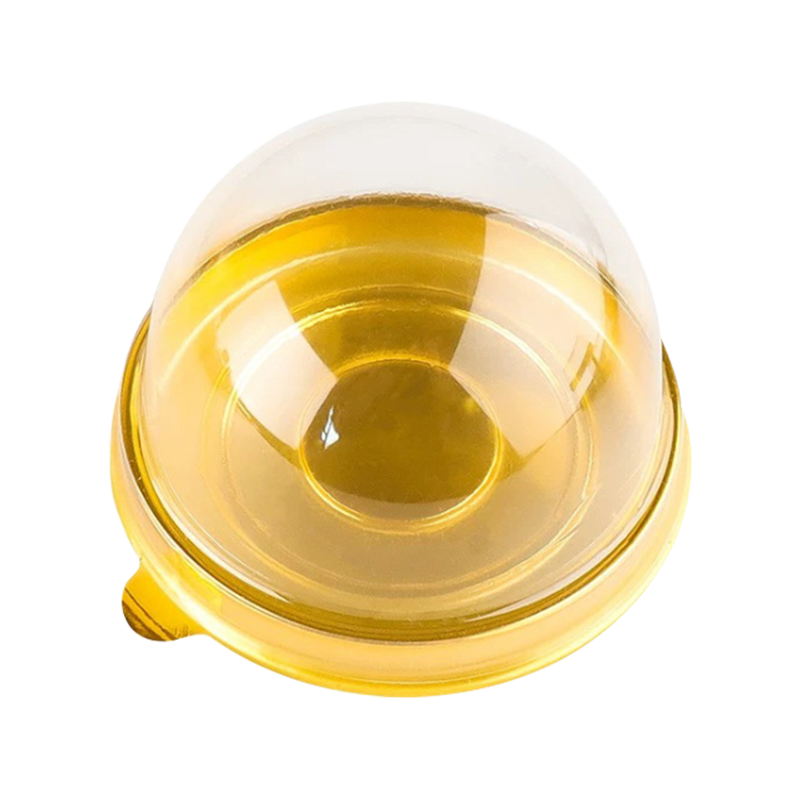



 Custom PVC Blister Plastic Boxes Manufacturers
