Food Packaging Buyer's Guide
Plastic Fresh Food Trays: A Practical Field Guide for Food Businesses
Sushi platters, pre-packed salads, bakery displays, and hot meal deliveries all rely on one quiet workhorse: the fresh food tray. Here is how to choose it well—without overpaying or underestimating the details.
At the end of a busy shift, the prepared food counter in a mid-sized supermarket tells a quiet story. Several salad lids have fogged over, an oily sauce has migrated across a bento compartment, and the last few sushi trays sit untouched because their film wrap has sagged. None of this is bad luck. It is the result of packaging decisions made weeks earlier, often with far less attention than the recipes themselves.
Plastic fresh food trays are easy to dismiss as commodity items. But the businesses that treat them as a technical purchase tend to see measurable results: less spoilage, fewer customer complaints, and display cases that actually help sell the food. This guide covers the material options, design features, and sourcing considerations that matter most when you buy fresh food trays in volume.
Why the Tray Matters More Than You Think
The tray is part of the product, not an afterthought. A container that mists over, leaks, or looks flimsy can undo the work of an experienced kitchen team. Conversely, a well-designed tray can extend perceived freshness, simplify portion control, and reduce the amount of food thrown away at the end of the day.
- Food safety and shelf life. A tray with a tight-fitting lid or film seal creates a barrier against contamination, moisture loss, and cross-odor transfer inside refrigerated display cases.
- Visual merchandising. Transparent trays act as a storefront. Clear PET and PP materials let customers inspect colour, texture, and portion size without touching the product.
- Operational efficiency. Stackable trays with consistent dimensions save refrigerator space, speed up packing lines, and reduce the number of damaged units in transit.
- Total cost. The cheapest tray measured per piece is often the most expensive after you count leaked orders, returned products, and wasted ingredients.
A fresh food tray that mists over, leaks, or looks flimsy can undo the work of a good kitchen.
PET, PP, or PS: Matching the Polymer to the Journey
The polymer determines the tray's temperature limits, clarity, impact resistance, and compatibility with different foods. For fresh food applications, three materials cover the vast majority of cases.
Material selection starts with the temperature journey a product will travel through.
| Material |
Clarity |
Typical Temperature Range |
Best Suited For |
Key Watch-Out |
| PET |
High, glass-like |
-20°C to 60°C |
Sushi, pastries, fruit, premium display packs |
Not for sustained hot fill or reheating |
| PP |
Moderate, slightly hazy |
-20°C to 120°C |
Hot meals, microwave reheating, frozen food |
Surface clarity is lower than PET |
| PS |
Moderate to high |
Cold service only |
Bakery display, deli counters, lightweight service |
Brittle in cold environments |
PET is the default choice when food is sold by appearance. Its high clarity makes ingredients look brighter and more appetising, which is why sushi platters, cake slices, and premium fruit are usually packed in PET rather than PP. The trade-off is temperature: PET will distort if it comes into contact with hot food, so it belongs in the cold chain.
PP is the better choice when the tray must move between a hot kitchen, a refrigerator, and a microwave. It softens less at high temperatures and holds up in freezer-to-oven transitions, which is why cooked meals and frozen prepared food are often specified in PP. Buyers who need more detail on the polymer's behaviour can consult our analysis of PP plastic food tray characteristics.
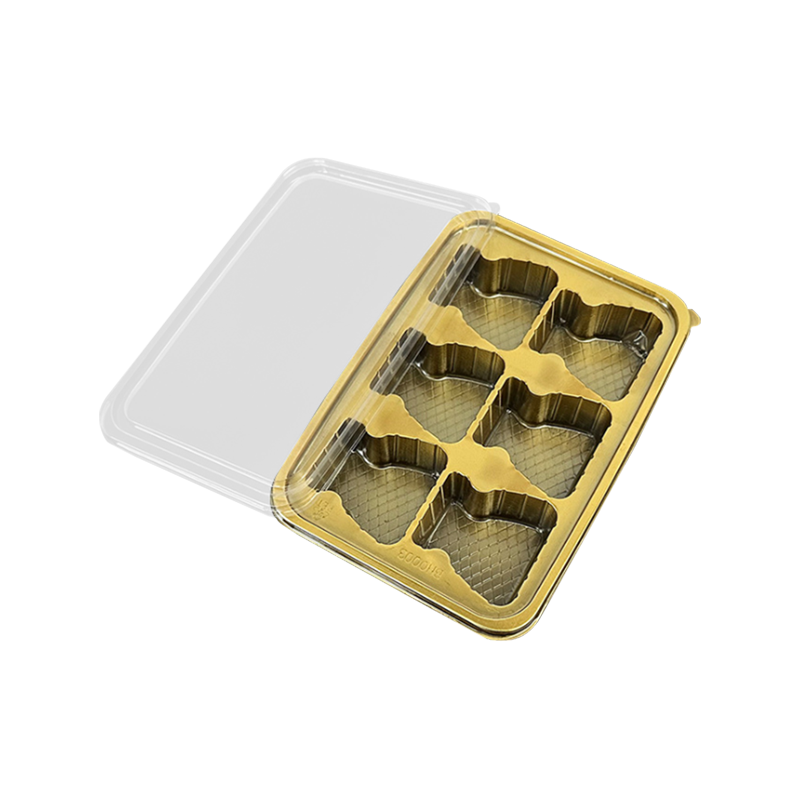
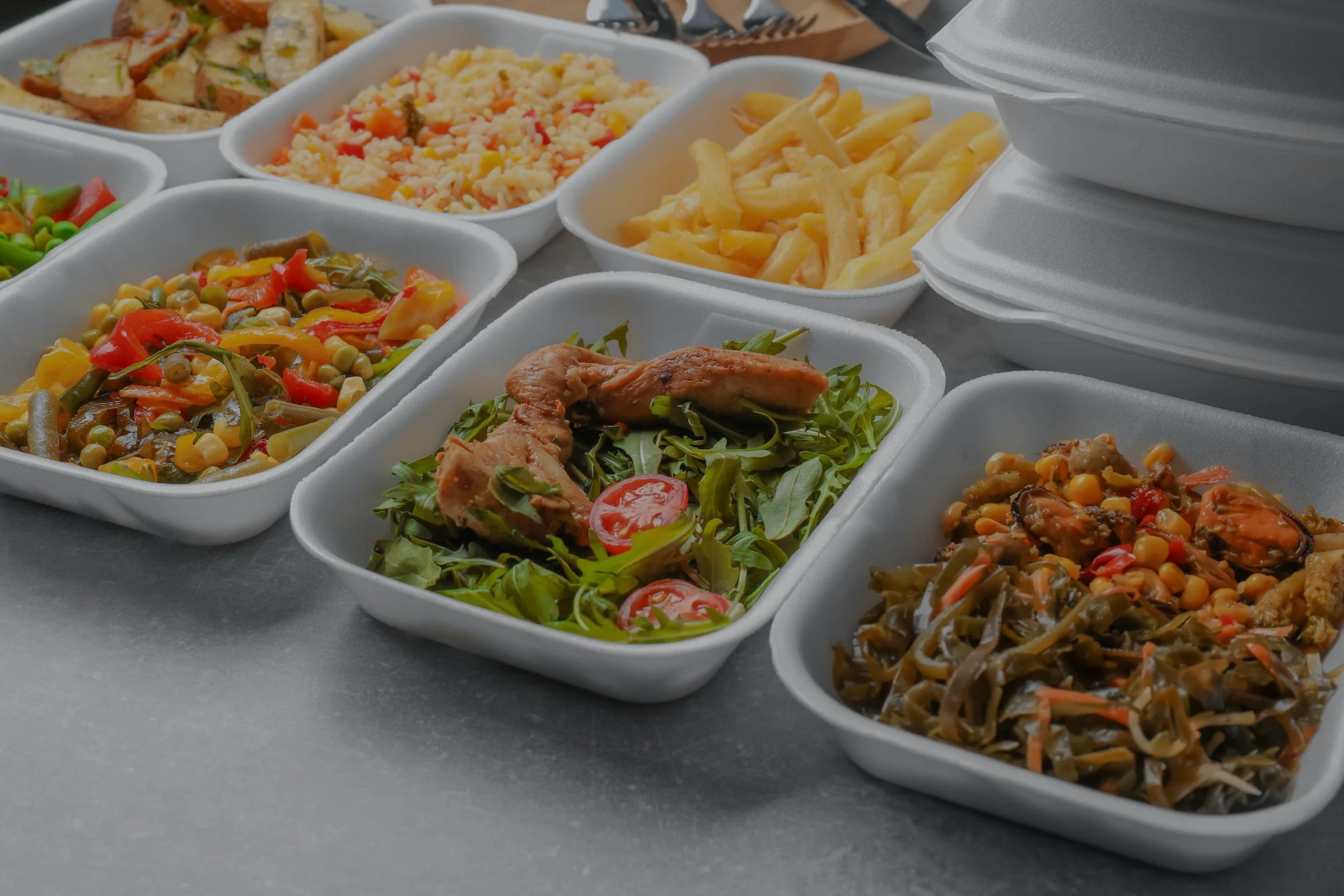
PS offers an economical middle ground for chilled display. It takes sharp detail in thermoforming, which is why multi-compartment bakery trays are often made from PS, but it becomes brittle at low temperatures and should never be used for reheating.
Info The safest way to choose between PET, PP, and PS is to map the tray's full journey: cold storage, transport, retail display, customer handling, and any reheating step. Each leg of that journey narrows down the material list.
Fresh Food Applications That Demand Specific Tray Design
Once the material is set, the tray's geometry and sealing features determine whether it performs in real service. Different food categories push trays in different directions.
Sushi, Sashimi, and High-Value Portions
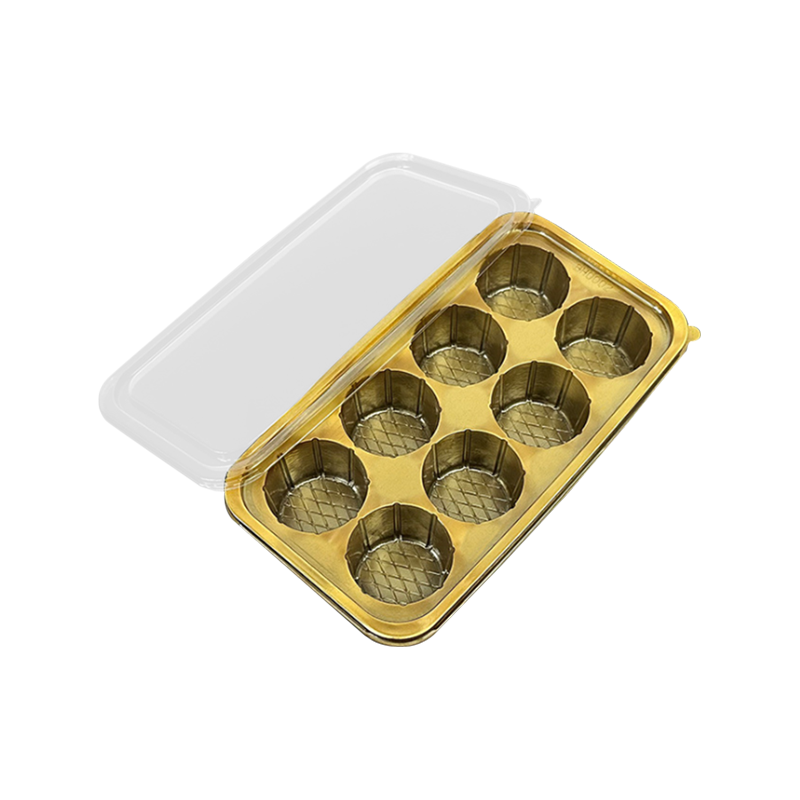
Sushi and sashimi are sold on appearance. The tray must be optically clear, rigid enough to resist flexing, and shaped to keep individual pieces separated. Flat vacuum-formed platters with transparent lids protect the food without pressing down on the topping. A defined compartment layout also helps portion control, which reduces giveaway and keeps presentation consistent across a production shift.
Salads and Cold Prepared Meals
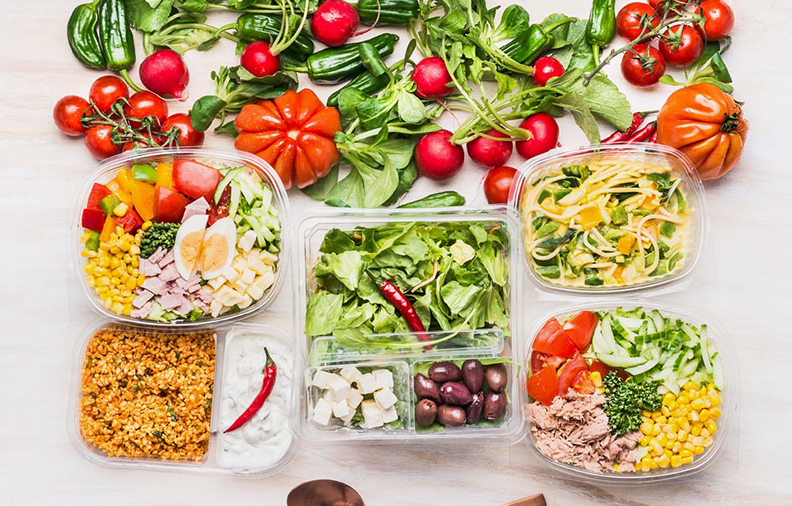
The biggest enemy of a salad line is condensation. When warm air inside a sealed tray meets a cold lid, droplets form, leaves wilt, and the product loses its crispness. Anti-fog covers change the surface behaviour of the film so that moisture forms a thin, invisible layer instead of visible droplets. For operators selling prepared salads, fruit cups, or deli sides, this single feature often separates a display that sells from a display that gets passed over.
Hot Takeout and Microwave Reheating
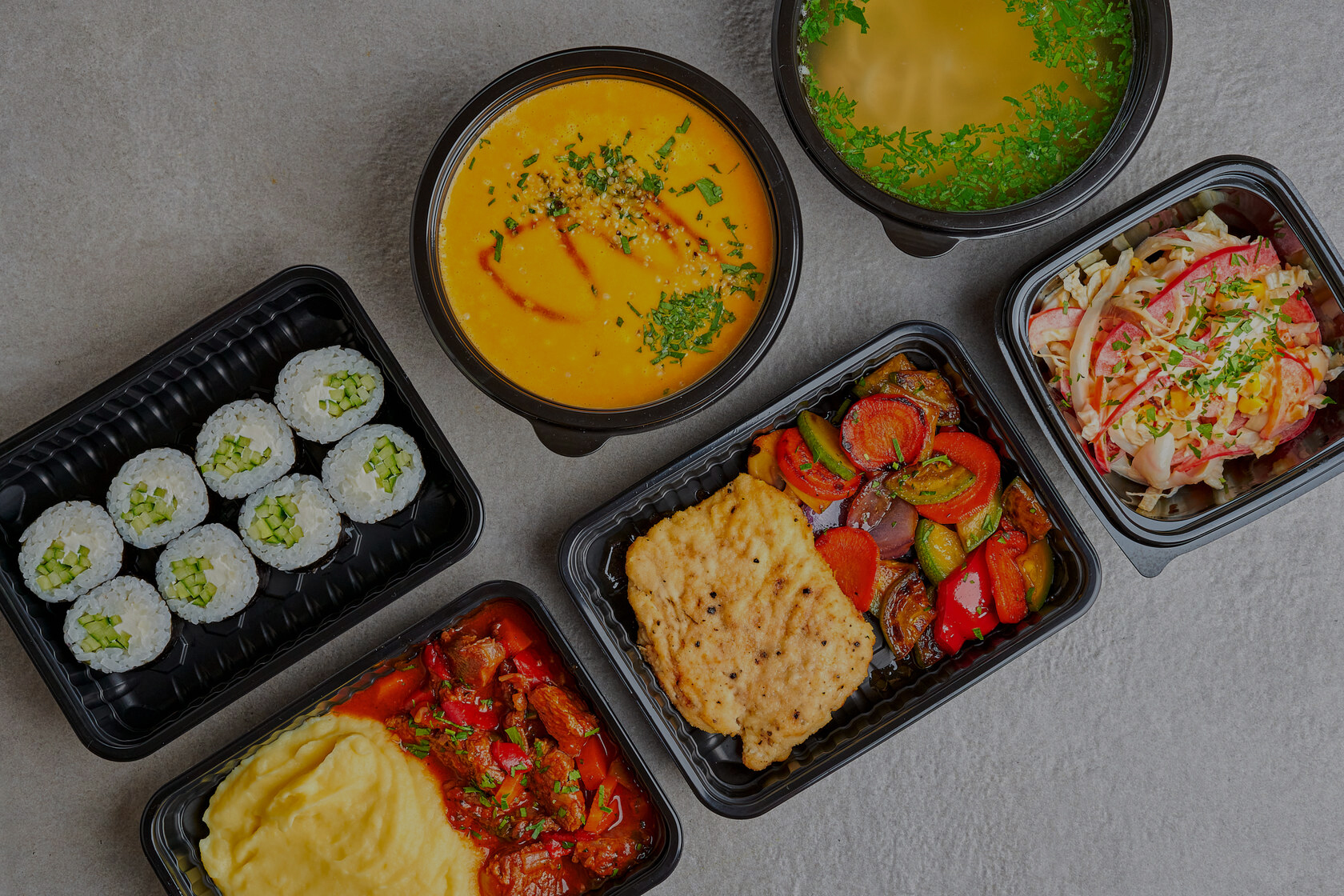
Hot food generates steam pressure and grease migration. Trays for noodle shops, canteens, and delivery-only kitchens need snug lids, venting strategies, and a material that tolerates both hot contents and reheating. PP trays with anti-overflow lids have become the practical standard in this segment because they can move from a bain-marie to a delivery bag to a microwave without warping.
Success A correctly matched PP tray with a vented lid keeps fried food crisp, prevents condensation from pooling, and survives a customer's microwave reheat cycle without warping.
Design Details That Protect Product Quality
Material matters, but the details determine whether a tray works on a packing line and in a display case. Experienced buyers check these points before approving any new format:
- Anti-fog covers for cold products, particularly salads and sushi, keep lids transparent under temperature swings.
- Anti-overflow and vented lids for hot food manage steam without letting sauce escape during delivery.
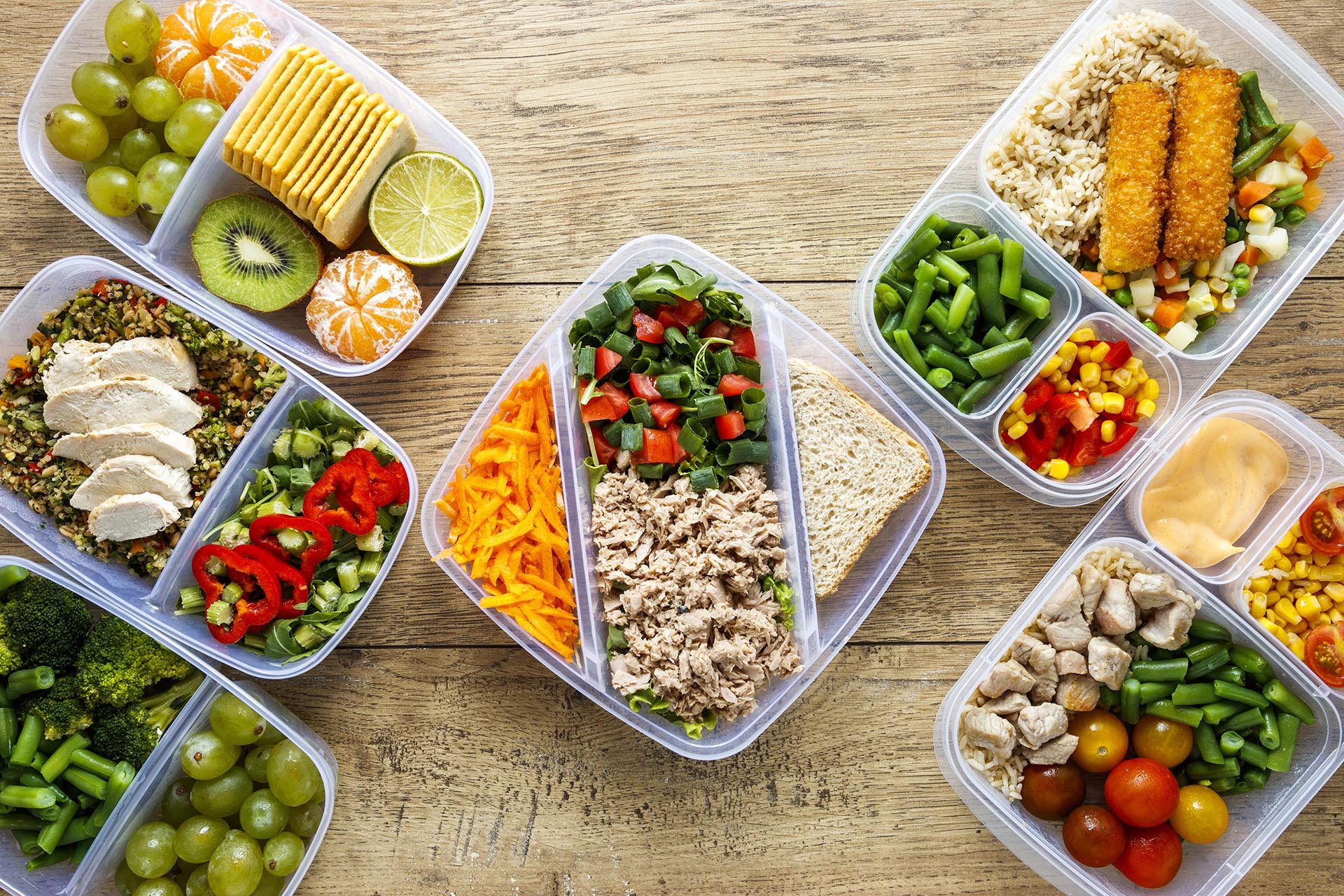
- Compartments and separators prevent juices, wasabi, or dressings from migrating across the tray.
- Nesting and stacking geometry keeps empty trays compact in the store room and full trays stable on delivery racks.
- Tamper-evident or secure closures matter for retail, catering, and third-party delivery channels.
Warning "Microwave-safe" printed on a tray means little without knowing the polymer grade and wall thickness. Ask the supplier for the actual temperature limit, and test a representative sample under your own heating conditions.
How to Vet a Fresh Food Tray Supplier
Two suppliers can quote similar prices for the same tray and still deliver completely different results. The difference shows up in dimensional consistency, lead times, and the speed with which defects are resolved. Buyers who purchase food trays regularly tend to evaluate suppliers on more than unit cost.
- Ask about material specification. Which polymer grade is used? Is there food-contact documentation for each production batch?
- Check mould ownership and customisation options. A supplier that owns its moulds can adjust cavity depth, rib positions, or stacking lugs without involving a middleman.
- Inspect batch consistency. Colour, gauge, and surface finish should stay stable from one run to the next, especially for branded private-label packaging.
- Evaluate delivery responsiveness. Fresh food businesses cannot afford a two-week wait after a machine breakdown. Suppliers with buffer stock and in-house production tend to respond faster.
- Confirm export experience. If you are sourcing across borders, the supplier's familiarity with container loading, lead times, and documentation matters as much as the tray itself.
Danger Using a tray outside its rated temperature range can cause warping, seal failure, and loss of food contact integrity. Confirm the stated limits with the supplier before committing to a format.
A factory-type supplier—one that produces trays rather than reselling them—can reduce both cost and risk. Donghang Polymer Material Technology is one such manufacturer, with in-house tooling design and thermoforming lines for PET, PP, and PS trays. Browsing a structured plastic food tray range is a practical way to see how material, shape, and closure options are organised before you request a quote.
The right plastic fresh food tray is rarely the cheapest option on the price list, and just as rarely the most expensive. It is the tray that survives the journey from your production line to the customer's table while making the food look better at every step. Start with the material, insist on the design features that protect the product, and choose a supplier who treats tray-making as an engineering discipline. Get those three decisions right, and packaging stops being a cost centre and starts being part of the product itself.



 English
 عربى
عربى Español



 Custom PVC Blister Plastic Boxes Manufacturers
