


 English
 عربى
عربى Español
How Much Does a Plastic Food Tray Weigh? Typical Weights and Key Factors
If you've ever ordered plastic food trays in bulk, the weight of a single tray is probably not the first thing on your mind. But it becomes very relevant when you're calculating shipping costs, planning portion control, or trying to match the right tray to its intended use. The short answer is that a typical plastic food tray weighs between 5 and 200 grams, with most single-compartment takeout trays landing in the 15 to 50 gram range. However, that range hides a lot of variation. The exact weight depends on the material, the tray's size and depth, the wall thickness, and added design elements like dividers or lids. In this guide, we'll break down those variables and give you practical reference points so you know what to expect.
What Determines the Weight of a Plastic Food Tray?
The weight of a plastic food tray is not random. Manufacturers design trays to balance strength, cost, and performance, and all of those choices affect weight. Here are the main factors to consider.
Material Type
The polymer used in a tray changes its density and therefore its weight at the same thickness. Polypropylene (PP) is the lightest common food-grade plastic, with a density of about 0.90 g/cm³. Polystyrene (PS) is slightly heavier at around 1.05 g/cm³, while PET (polyethylene terephthalate) is the heaviest of the three at roughly 1.30 g/cm³. That means a PET tray will feel more substantial than an identical PP tray, even if both are used for the same kind of food. In practical terms, a PET tray can weigh about 44% more than a PP tray of the same volume and wall thickness, so switching materials can have a noticeable effect on both cost and logistics.
Size and Capacity
A tiny sauce cup tray that holds 30 ml has almost nothing in common with a 2-liter catering tray. As the footprint and depth increase, more material is needed to maintain structural integrity, so the weight climbs quickly. Most product listings include both capacity and dimensions, and those are your first clues for weight estimation. A deep tray with tall walls needs thicker sheet or extra ribs to avoid buckling, which adds grams.
Wall Thickness
Thermoformed trays are made from plastic sheet of a specific gauge. Standard food trays often use sheet thicknesses from 0.3 mm to 0.8 mm. A thicker sheet produces a stiffer, more durable tray but also a heavier one. Heavy-duty trays designed for large cuts of meat or buffet service may go even thicker, pushing the weight toward the upper end of the range. When suppliers quote a “mil” specification (1 mil = 0.0254 mm), you can compare products more accurately. Typical ranges for disposable food trays are 12 mil to 32 mil.
Design Features
Dividers, reinforcing ribs, and rolled edges add rigidity but also add grams. A tray with three compartments will always weigh more than a flat tray of the same outer dimensions. Lids add significant weight too, especially if they are made from the same sheet and remain hinged to the base. When comparing products, it is important to check whether the listed weight includes the lid or just the base. For example, a hinged takeout container with a lid can weigh 40–60% more than the base-only version.
| Material | Density (g/cm³) | Typical Relative Weight | Common Uses |
|---|---|---|---|
| PP | 0.90 | Lightest | Lunch boxes, frozen food trays |
| PS | 1.05 | Mid | Silver trays, cake bases |
| PET | 1.30 | Heaviest | Transparent pastry and sushi trays |
Typical Plastic Food Tray Weight Ranges by Type
To give you a practical starting point, the table below lists common tray categories and the weight ranges that are typical for each. These numbers are based on standard thermoformed products available in the market. Actual products can vary, so always confirm with a supplier when accuracy matters.
| Tray Type | Typical Weight | Material Commonly Used |
|---|---|---|
| Small sauce / dip tray (30–60 ml) | 5–10 g | PP, PET |
| Single-compartment takeout tray (500–750 ml) | 15–30 g | PP |
| Multi-compartment lunch tray (with dividers) | 25–50 g | PP, PS |
| Sushi platter tray (large, with lid) | 60–120 g | PET, PP |
| Heavy-duty catering tray (2+ liter) | 80–200 g | PET, PS |
If you are looking for a lightweight option for bakery or snack packaging, a single transparent thick PET pastry tray can still stay well below the heavier catering trays while offering good visibility for your product. For frozen food applications, PP trays are a popular choice because the material stays flexible at low temperatures and keeps weight moderate, such as the disposable PP frozen food packaging tray. On the heavier side, PS trays with polished surfaces are often used where a premium feel matters, including the disposable PS silver food tray.
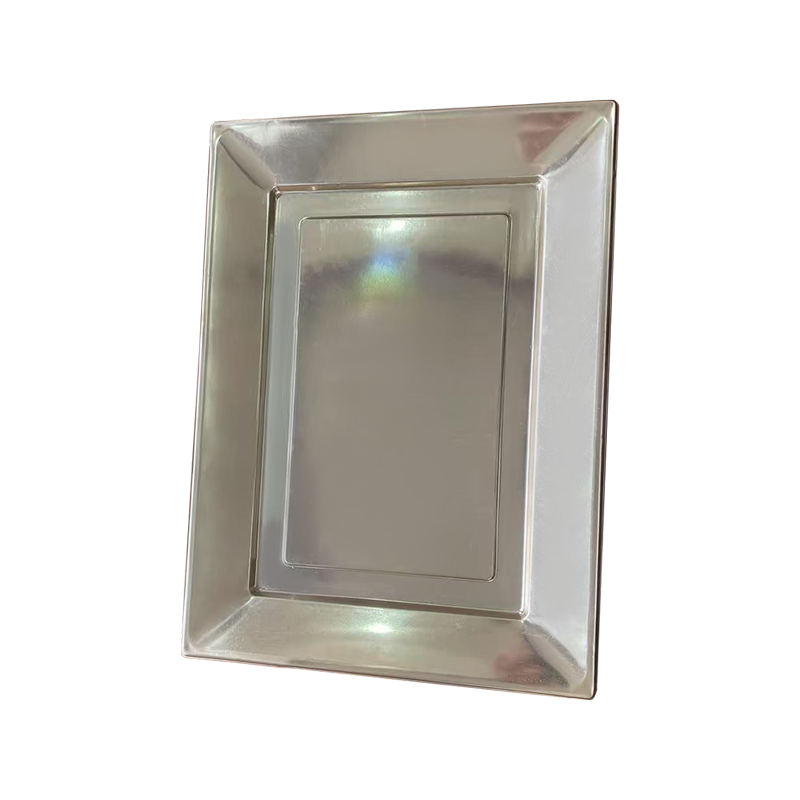 Wholesale Disposable PS silver food tray Suppliers, Factory - Donghang Polymer MDonghang Polymer Material Technology Co., Ltd is China Disposable PS silver food tray suppliers and factory,Disposable PS Silver Food Tra...View Product →
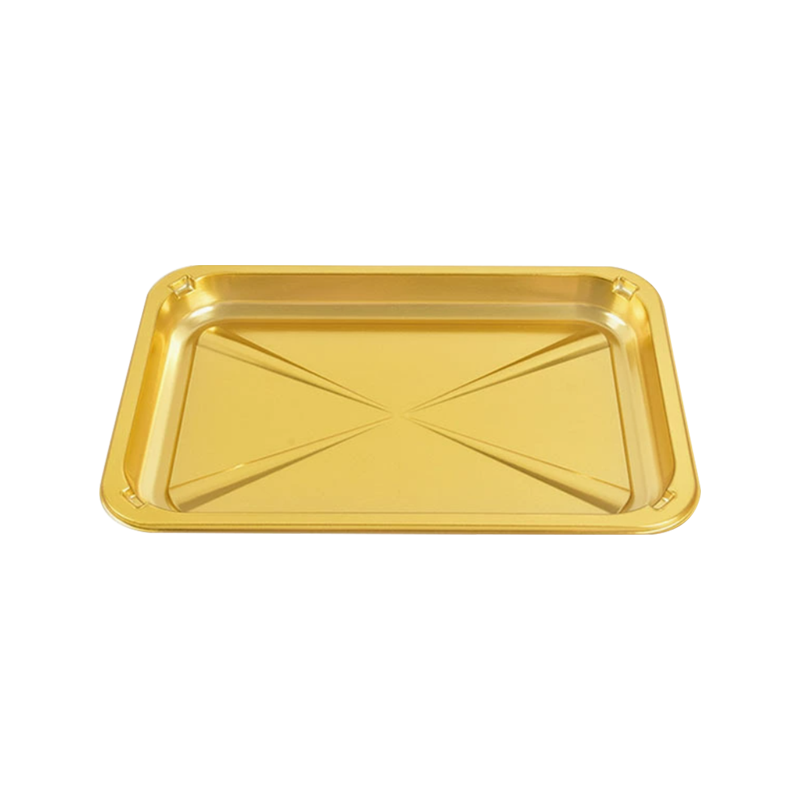 Wholesale Disposable frozen food packaging tray Suppliers, Factory - Donghang PoDonghang Polymer Material Technology Co., Ltd is China Disposable frozen food packaging tray suppliers and factory,Disposable frozen food...View Product →
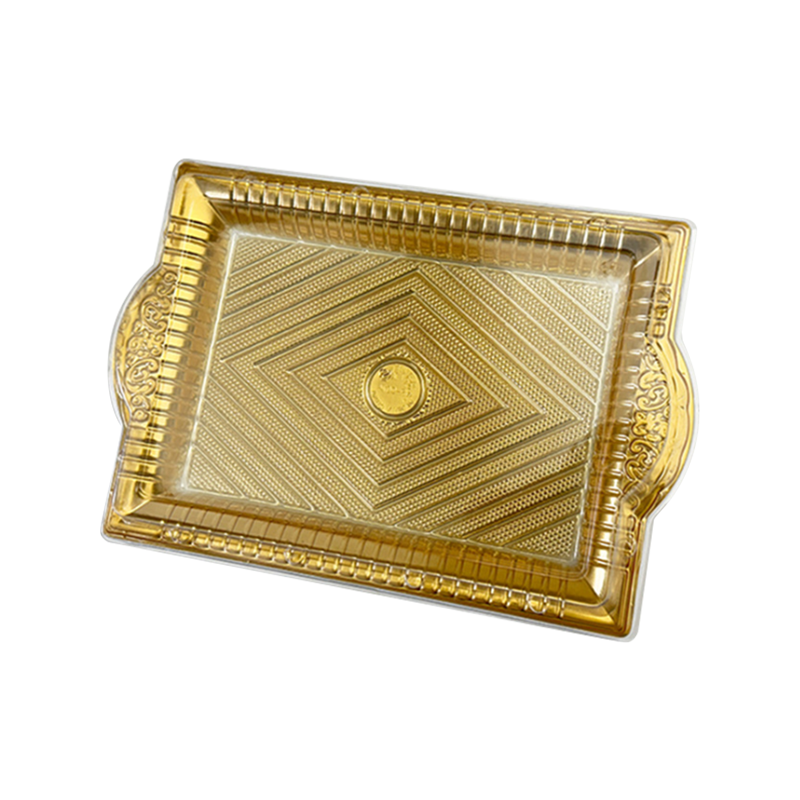 Wholesale Disposable transparent thick pastry tray Suppliers, Factory - DonghangDonghang Polymer Material Technology Co., Ltd is China Disposable transparent thick pastry tray suppliers and factory,Disposable transpar...View Product →
It is also worth noting that manufacturers typically hold tray weight within a tolerance of ±5–8% for a given production run. A tray listed at 30 g may come in at 28.5 g or 31.5 g depending on sheet thickness variations. For most applications, this variation is acceptable, but if you are selling food by net weight or paying freight based on exact gross weight, you should ask your supplier for the expected tolerance before placing a large order.
How to Estimate or Measure the Weight Yourself
When you need an exact number, the best method is simple: put the tray on a digital kitchen scale. Make sure the tray is clean and dry, and if the tray is sold with a lid, decide whether you need the combined weight or just the base. For a quick estimate without a scale, look at the product specifications. Reputable suppliers list the net weight per piece, along with dimensions and material. If those details are missing, contact the manufacturer and ask.
You can also do a rough calculation from the sheet thickness and footprint. A flat tray with an area of 300 cm² and a sheet thickness of 0.04 cm has a material volume of 12 cm³. Multiply that by the material density (for PP about 0.90 g/cm³) and you get a base weight of about 10.8 g. Adding sidewalls, flanges, and dividers increases the area, so the simplest approach is still weighing a physical sample.
For bulk orders, multiply the single-tray weight by the quantity and add the weight of the carton and any interleaving paper. This gives you the gross weight for shipping. For example, a 30 g tray packed 500 per carton would add 15 kg just for the trays, before packaging materials. That number affects your freight cost and storage planning.
If you are developing a custom tray, the weight can be tuned during mold and sheet selection. A vacuum-formed tray with a thinner flange and no heavy rim will weigh less, while adding stacking ribs can increase it. At Donghang Polymer, for instance, we often help customers adjust wall thickness and design to hit a target weight without compromising strength. You can explore the plastic food tray category to see the range of existing designs, or read our analysis of PP plastic food tray characteristics for a deeper look at how material choice affects performance and weight.
Why Tray Weight Matters in Practice
Knowing how much a plastic food tray weighs is not just about satisfying curiosity. It influences procurement decisions, operational costs, and even customer satisfaction.
Shipping and Logistics
Freight charges are calculated by volume and weight. Lighter trays mean lower per-unit transport costs, especially when moving hundreds of thousands of pieces. A difference of 10 grams per tray adds 10 kg for every 1,000 trays, which can be significant for outbound deliveries. Across a full truckload, the cumulative weight difference between a 20 g tray and a 30 g tray can be enough to change your freight class or push you over a weight limit.
Portion Control and Product Quality
In food service, a tray with a consistent weight helps with portion control because the container itself contributes a predictable tare weight. If you are selling pre-packaged meals by net weight, a heavier tray means you must reduce the food content to stay within label claims. That can hurt perceived value if the tray looks bulky but holds less food. For manufacturers of frozen meals or ready-to-eat items, the tray weight directly determines how much food can be filled under the declared net weight.
Perceived Quality
Customers often associate a heavier tray with better quality. A flimsy, featherweight tray can feel cheap, even if it performs well. On the other hand, some applications like small bakery items benefit from a very light tray that does not dominate the product. The key is to match the tray weight to the product and brand positioning. A golden cake base for a premium bakery, for example, may need extra thickness to convey a sense of sturdiness, while a disposable sandwich wedge can be as light as possible without tearing.
Environmental and Material Efficiency
Lighter trays consume less plastic resin, which reduces both material cost and the environmental footprint of each package. Many brands now ask suppliers to optimize tray weight downward as part of their sustainability goals. This does not mean simply making trays thinner and weaker; it means redesigning corners, gussets, and rib patterns to maintain stackability and strength while using the minimum amount of material. A well-engineered tray can be 10–20% lighter than an older design without any performance loss.
So, how much does a plastic food tray weigh? In most commercial contexts, the answer is between 5 and 200 grams, with the most common food-service trays falling between 15 and 50 grams. The exact weight depends on the material, dimensions, wall thickness, and design details. When you need reliable numbers, check the manufacturer's specification sheet or weigh a sample directly. And when you are sourcing trays, remember that weight is a deliberate design choice—not an accident. Choosing the right weight can save you money, improve your packaging line efficiency, and give your customers the right feel for your product.





- The company requires rigorous, using a high starting point, trustworthy, quality, and actively develop and innovate, the pursuit of excellence route!
CONTACT US
- Tel: +86-15026677788
- E-mail: [email protected]
- Add: No.11 Huafeng Road, Anhua Community, Anhua Town, Zhuji City, Shaoxing, Zhejiang, China
GET A QUOTE
Copyright @ Donghang Polymer Material Technology Co., Ltd. All Rights Reserved.
 Custom PVC Blister Plastic Boxes Manufacturers
