


 English
 عربى
 Español
Carton Sleeve Packaging Definition: Food Tray Sleeve Guide for Food Brands
Packaging field notes
Carton Sleeve Packaging: The Quiet Structure Behind a Better Food Tray
A clear, practical definition of carton sleeve packaging — and why the food tray sleeve is one of the most useful, least understood formats in modern food presentation.
What Is Carton Sleeve Packaging?
Carton sleeve packaging is a two-part packaging format: an inner tray holds the food, and an outer carton sleeve wraps around it. The sleeve is usually an open-ended paperboard tube, folded and glued flat for shipping, then opened and slid over the tray. It may cover all four sides, leave a window, or stop short of the tray edge so the food remains visible. In food packaging, the combination is often called a food tray sleeve.
It is not a folding carton in the usual sense. A folding carton closes around the product. A sleeve slides. That difference matters because it changes how the package is assembled, opened, and displayed. A well-made food tray sleeve should feel like one object in the hand, even though it is two components doing two different jobs.
- Inner tray: formed from PET, PP, or PS; holds food; provides rigidity, barrier, and sometimes a lid.
- Outer sleeve: printed paperboard or carton board; slides over the tray; protects the join and carries the brand.
- Fit system: the tolerance between tray and sleeve; determines whether the package feels precise or loose.
The definition sounds simple, but the format rewards precision. A sleeve that is two millimeters too tight can scuff the tray. One that is too loose can slide off in a shopping bag. The best food tray sleeves are designed as a system, not as two purchases made separately.
Why the Food Tray Sleeve Works So Well
The food tray sleeve solves a familiar problem: how to show the food, protect it, and still say something about the brand. Transparent trays let customers see color, texture, and portion size. The sleeve adds a clean surface for names, ingredient cues, serving suggestions, and regulatory information. Neither part has to do everything.
“The tray does the holding. The sleeve does the telling.”
That division of labor is why the format appears across bakery counters, sushi counters, chilled prepared meals, and frozen food. It is flexible without being vague. The same structural idea can feel rustic, clinical, celebratory, or quietly premium, depending on the board, print, and tray.
Protection without hiding the food
A sleeve adds a layer of protection where it matters most: the edges, the closure, and the printed story. It can keep a lid from lifting in transit, reduce fingerprints on a clear tray, and give the package a flat surface for labels. Because it is open at the ends, it also allows airflow and avoids the sealed-in condensation that can spoil the look of chilled food.
Brand presence on a crowded shelf
A tray alone can look like a component. A sleeve makes it a product. The sleeve is where a food brand can use typography, color, and a single clear message without covering the food itself. In a display case, that combination is powerful: the food does the appetite work, and the sleeve does the recognition work.
Tray and Sleeve, Side by Side
It helps to think of the package as a small system. The table below is the practical version we use when reviewing a new food tray sleeve project.
| Element | Primary job | Typical material | What to check |
|---|---|---|---|
| Inner tray | Holds food, manages moisture and weight | PET, PP, PS | Food contact, temperature, lid fit |
| Outer sleeve | Protects closure, carries print and brand | Paperboard or carton board | Sliding fit, board thickness, print registration |
| Fit zone | Makes two parts feel like one | Tray flange and sleeve depth | Too tight, too loose, sharp edges |
| Opening | Guides how the package is opened and reclosed | Sleeve cut and thumb notch | Glue line strength, tear risk |
Materials and the Food-Safe Handshake
Most food tray sleeves combine a plastic tray with a paperboard sleeve. The tray material is chosen for the food, not the sleeve. PET gives clarity and stiffness for chilled bakery, fruit, and sushi. PP brings heat resistance and toughness for warm food, microwave use, and frozen items. PS offers a crisp, glossy look and good dimensional stability for cold applications. The sleeve board is chosen for print, stiffness, and runnability.
The handshake between materials matters. A heavy board may feel premium, but it can make a lightweight tray feel unbalanced. A very thin board may slide nicely but crease at the corners. For example, PP food tray material characteristics are often a better guide to the tray side of the decision than a generic “food safe” claim. The goal is not the thickest or most expensive combination. It is the combination that behaves well from filling line to customer hand.
 Plastic Food Trays for Foodservice PackagingExplore PET, PP, and PS food trays for foodservice use, with stackable, lightweight formats suited to matching tray and sleeve performance.View Product →
We make the trays that sit inside these sleeves, so we tend to start with the food contact and load path. Once the tray is stable, the sleeve has a reliable body to wrap around. That order — tray first, sleeve second — prevents a lot of expensive redesign later.
Design Details That Decide Whether It Feels Premium
Premium is not a color. It is the absence of small failures. A food tray sleeve feels considered when it slides cleanly, opens without tearing, sits flat on a shelf, and still looks intact after a short trip home.
Fit and tolerance
Set the sleeve tolerance around the tray flange, not the tray base. The flange is the widest point and the part that catches. A little air is useful; too much air reads as cheap. If the tray has a lid, test the sleeve with the lid closed, because the lid often adds height that the drawing does not show.
Opening and handling
A thumb notch, a perforated tear strip, or a slightly shorter sleeve can change the entire experience. The package should tell the customer where to begin. Avoid glue lines that sit exactly where the thumb goes. Avoid sharp board edges on the side that faces the hand.
Print, finish, and visibility
The sleeve is a small billboard, but it is also a physical object. Uncoated board feels warm and tactile; coated board holds fine detail and strong color. A window can turn the tray into part of the design. The shift toward paper-based food service packaging has made board selection more interesting, but it has also made proofing more important: recycled and uncoated boards can change how ink reads.
 OEM/ODM Disposable Plastic Foodservice PackagingView customizable PP, PS, and PET foodservice packaging for takeout and gatherings, including trays, boxes, and cups with clear presentation options.View Product →
Where Food Tray Sleeves Fit in Real Food Categories
The format is flexible enough to appear in very different food environments. The common thread is a tray that needs presentation, protection, or a clean place to carry information.
- Bakery and pastry: clear or colored trays show cakes, tarts, and pastries; sleeves add occasion, flavor notes, and handling instructions.
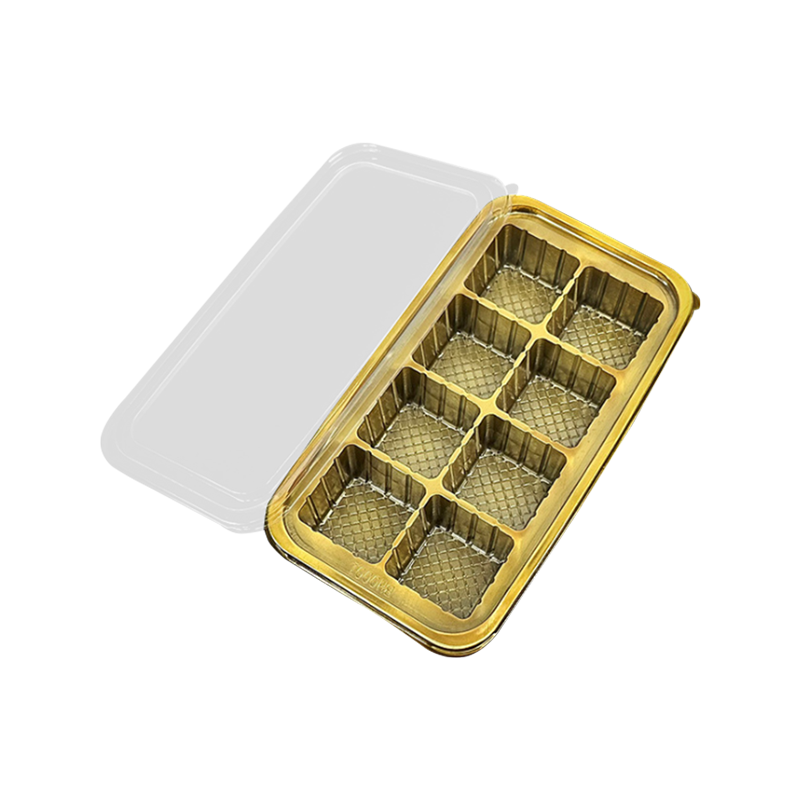
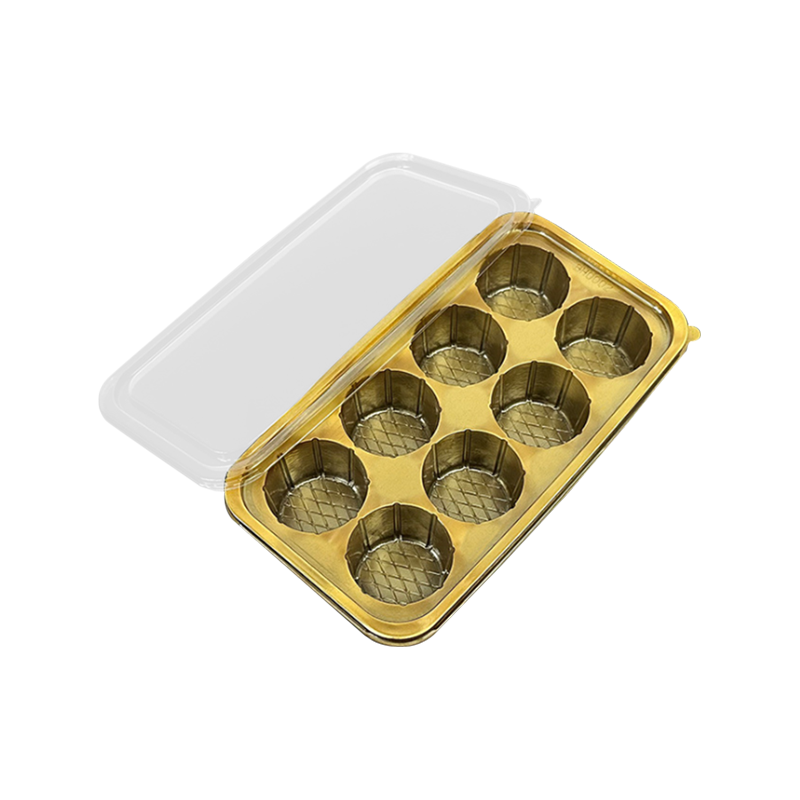
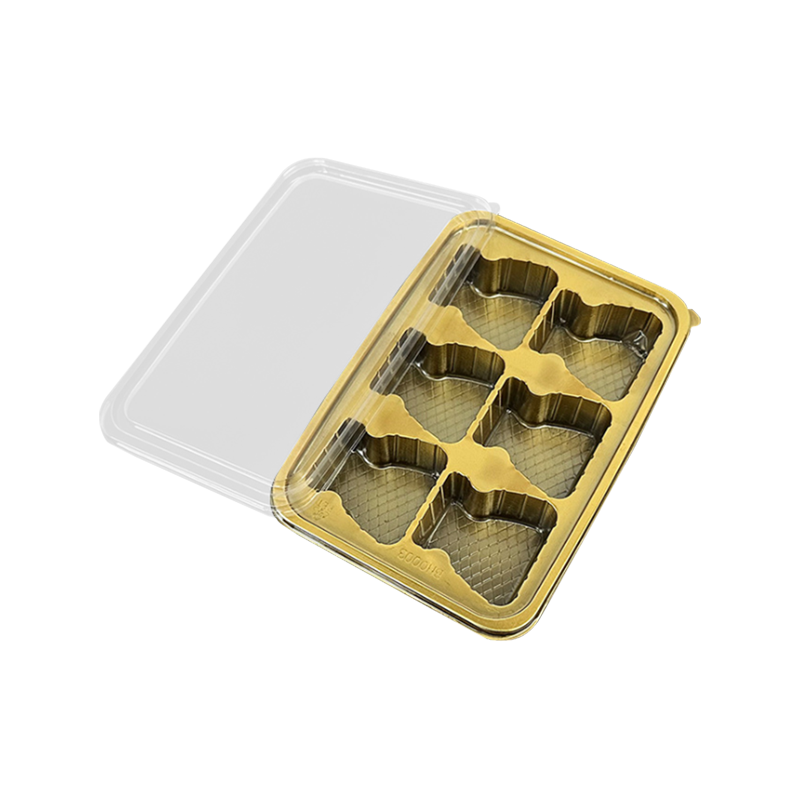
- Sushi and sashimi: black, gold, or clear trays create contrast; sleeves keep the lid secure and give the brand a clean panel without hiding the food.
- Fruit and light meals: transparent trays show freshness; sleeves can carry variety, origin, or serving suggestions.
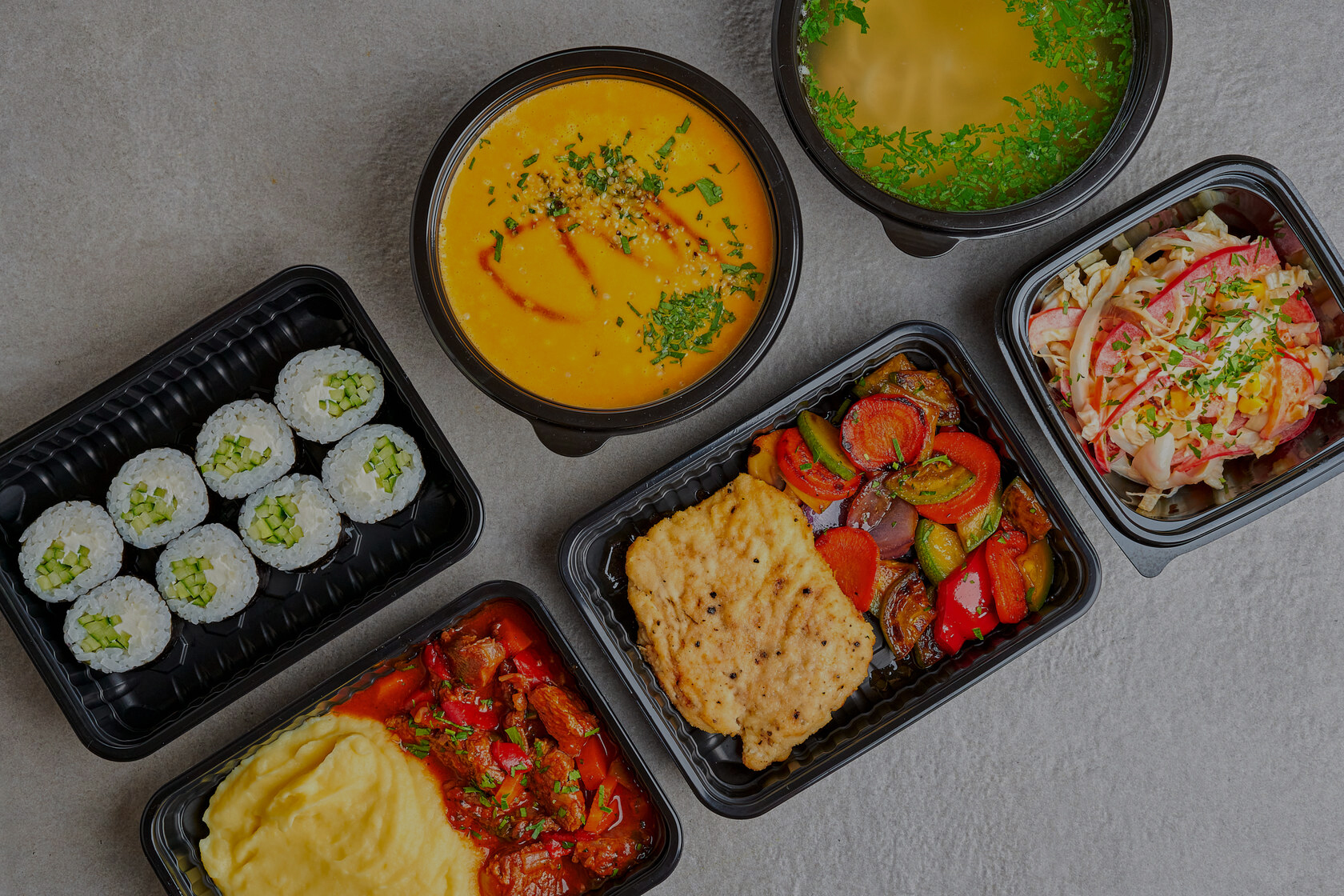
- Chilled prepared food and salads: anti-fog trays and vented sleeves help manage visibility and condensation.
- Frozen food: stiffer trays and board sleeves support stacking, freezer storage, and clear cooking instructions.
- Candy and chocolate: small trays and sleeves create portion control and gift-ready presentation.
 Plastic Fruit and Sushi BoxesBrowse transparent compartmented fruit sushi boxes and related takeaway trays, designed to display and protect food while keeping items separated.View Product →
At Donghang, we form the trays that sit inside these sleeves — from PET and PP food trays to fruit and sushi boxes — and we work with customers on the fit, finish, and pack-out that make the sleeve behave properly. The sleeve may be paper, but the tray still decides whether the package feels solid.
Common Mistakes to Avoid
Most problems with carton sleeve packaging are not creative problems. They are interface problems between two good components.
- Designing the sleeve before the tray is final. The tray flange, lid height, and stacking feet all affect the sleeve.
- Testing an empty tray. A filled tray changes weight, flex, and friction.
- Ignoring moisture. A beautiful board can stain or soften when it meets condensation.
- Making the sleeve too tight to feel “premium.” Tightness is not precision; it is friction.
- Forgetting the pack-out. Sleeves are usually shipped flat, then opened by hand. If the glue line or crease is wrong, the line speed suffers.
- Printing before fit is approved. A perfect print on a poorly fitting sleeve is still a poorly fitting sleeve.
A Practical Checklist Before You Order
Use this checklist as a conversation guide with your tray supplier and sleeve printer. It is short because the important questions usually are.
- Confirm the food contact material and temperature range.
- Measure the tray at its widest point, including the lid and any stacking features.
- Decide whether the sleeve will cover the full tray, leave a window, or stop short.
- Test the sliding fit with the tray filled to production weight.
- Check the opening method: thumb notch, tear strip, or simple slide-off.
- Review board stiffness, print coverage, and moisture exposure together.
- Approve a physical sample in the same board and tray material as production.
Final Thoughts
Carton sleeve packaging is often described as a simple outer wrap, but the best food tray sleeves are not simple at all. They are a quiet piece of design coordination: a tray that holds the food properly, a sleeve that slides cleanly, and a print surface that tells the customer what to expect before the first bite.
If you are planning a food tray sleeve, start with the tray. Get the food contact, rigidity, lid fit, and temperature range right. Then let the sleeve do its job. When the two parts agree, the package feels effortless — and that is usually what premium means in food packaging.





- The company requires rigorous, using a high starting point, trustworthy, quality, and actively develop and innovate, the pursuit of excellence route!
CONTACT US
- Tel: +86-15026677788
- E-mail: [email protected]
- Add: No.11 Huafeng Road, Anhua Community, Anhua Town, Zhuji City, Shaoxing, Zhejiang, China
GET A QUOTE
Copyright @ Donghang Polymer Material Technology Co., Ltd. All Rights Reserved.
 Custom PVC Blister Plastic Boxes Manufacturers
