Plastic Preservation Trays: The Packaging Layer That Decides Whether Food Still Looks Fresh
Polymer grade, wall thickness, seal geometry and headspace settle more shelf-life arguments than any film datasheet. Here is how to specify all four before you cut tooling.
A Tray Usually Fails Before the Food Does
A bakery moves 2,000 cheesecakes a week into a 0.5 mm PP tray with a hinged lid. Nothing leaks in transit, nothing cracks on the pallet, and every tray leaves the plant looking the way it did in the sample room. Three days later the retailer sends photographs: condensation pooled under the lid, a dull glaze, and one corner of the rim starting to lift. The tray was not defective. It had been specified for transport, and preservation was never part of the brief.
That gap decides real money. Shelf life in a plastic tray is set by four variables: polymer, wall thickness, seal geometry and the atmosphere inside the pack. The tray controls at least three of them. Get them right and the lidding film, the label and the carton simply do their jobs. Get them wrong and no film recovers the days you have already lost.
Four failure modes are worth designing against from the first drawing:
- Moisture migration. Water leaves the product and finds the coldest surface, usually the lid. Freezer burn, dry cake and soggy pastry all start here.
- Condensation and fog. Beaded water hides the product and reads to shoppers as a freshness problem, even when the product is fine.
- Seal failure and leakage. Flange flatness and wall thickness variation decide whether a seal holds on day one or day five.
- Oxidation and light. Headspace oxygen, plus clear packaging that lets light through, shortens the window for fats, oils and cured meats.
Pick the Polymer for the Temperature First, Appearance Second
Three polymers carry almost all food preservation tray work, and the differences that matter are rarely the ones on a sample card.
PET, normally amorphous APET sheet, is chosen when the product has to be seen. It gives a glass-clear wall, holds a crisp flange for film or lid sealing, and vacuum forms cleanly, which is why chilled bakery, sushi platters and vacuum-formed cake trays are so often PET. Its limits are thermal: above roughly 60°C the tray softens, and at deep-freeze temperatures a thin APET wall turns brittle.
PP is the workhorse for anything that must survive heat or a long frozen stay. It tolerates microwave reheating and short hot-fill cycles, holds its shape at -18°C far more gracefully than APET, and takes multi-compartment tools easily, which is why frozen meals, soups and lunch boxes default to it. The trade-off is appearance: unstretched PP is translucent rather than clear, so cold display usually needs a clarified grade or a separate anti-fog lid. Our notes on PP food tray material characteristics and application scenarios walk through the same trade-off in more detail.
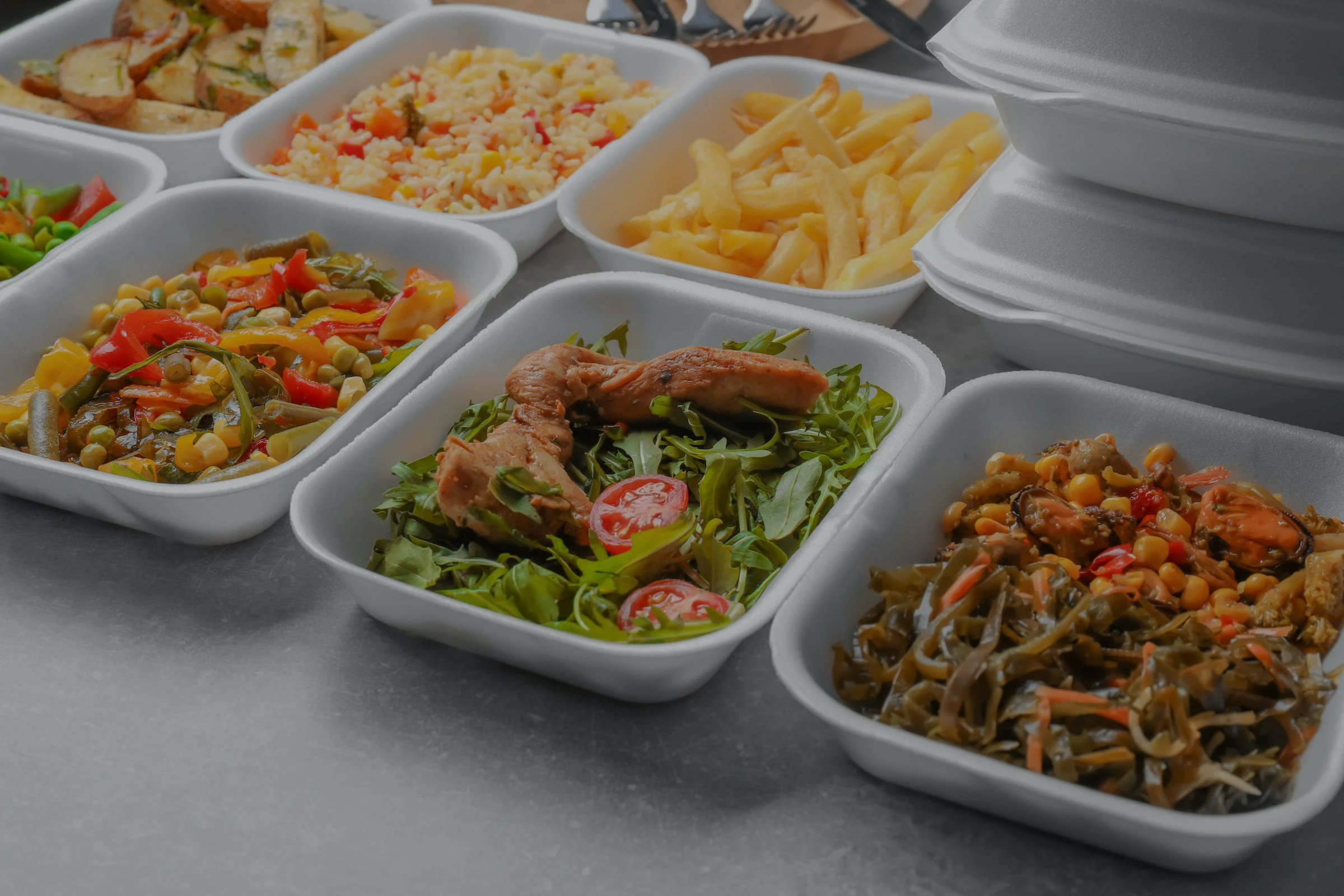
PS, in HIPS or OPS form, is the display polymer: rigid, glossy and easy to colour in silver, black or white. It is also the least forgiving of heat and the most prone to stress cracking under load, so it belongs in chilled applications with a short, controlled distribution window.
Typical behaviour of the three polymers used in food preservation trays; resin grade, wall thickness and lid material all shift these values.
| Material |
Clarity |
Practical heat range |
Where it protects best |
Watch out for |
| PET (APET) |
Glass clear |
Chilled to about 60°C |
Chilled bakery, sushi platters, vacuum cake trays |
Brittle at deep freeze, no hot fill |
| PP |
Translucent to milky |
Microwave and hot fill, briefly to 100-120°C |
Frozen meals, soups, multi-compartment lunch boxes |
Lower gloss, needs anti-fog for cold display |
| PS (HIPS, OPS) |
Glossy, opaque or clear film |
Chilled only, roughly to 70°C |
Silver and black catering, bakery and confectionery display |
Stress cracking, poor heat resistance |
Grade is only half the specification. A 0.4 mm PET tray and a 0.8 mm PET tray of the same shape behave like two different products, because the thinner wall flexes under vacuum and moves the seal with it.
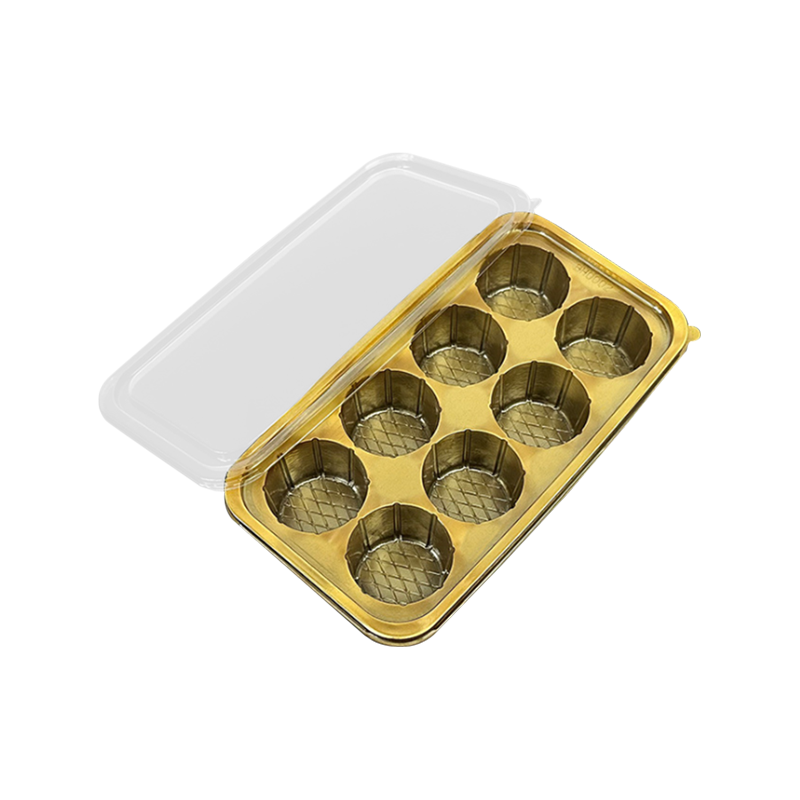
Where a chilled product needs both visibility and a seal that survives a vacuum cycle, a PET cake vacuum tray delivers the clear wall and the rigid flange in a single part.
Seal Geometry and Headspace: Where Shelf Life Quietly Leaks Away
The rim is a sealing surface, not decoration
Every sealed tray has one joint that matters more than the rest: the flange where film, lid or a second tray meets the first. A vacuum-formed flange is typically 8 to 12 mm wide and needs to be flat within a few tenths of a millimetre along its whole length. Corner radii, ribs, gate marks, embossed text and moulded-in logos all eat into the contact area the seal depends on. When a customer reports leaks that appear only on the fifth day, the cause is nearly always flange flatness or wall thickness variation, not the polymer.
Most shelf-life complaints are not material complaints. They are flange complaints: a rim that was never flat enough for the seal to hold.
Headspace sets the clock before the pack is closed
The residual oxygen above the product starts the deterioration clock. A deep tray that leaves 40 mm of empty space needs gas flushing or a vacuum cycle to reach a low-oxygen atmosphere; a shallow tray that lets the film sit close to the product needs far less. Design the depth around the product, not around a mould that is already paid for.
Anti-fog and venting are opposite solutions
Anti-fog additives migrate to the inside of the lid so condensation spreads as a thin film instead of beads, which matters for chilled salads, cut fruit and sushi. Venting does the opposite: it releases steam from hot food so the film does not balloon and peel the seal. Specifying one when the application needs the other is one of the most common errors in convenience food packaging.
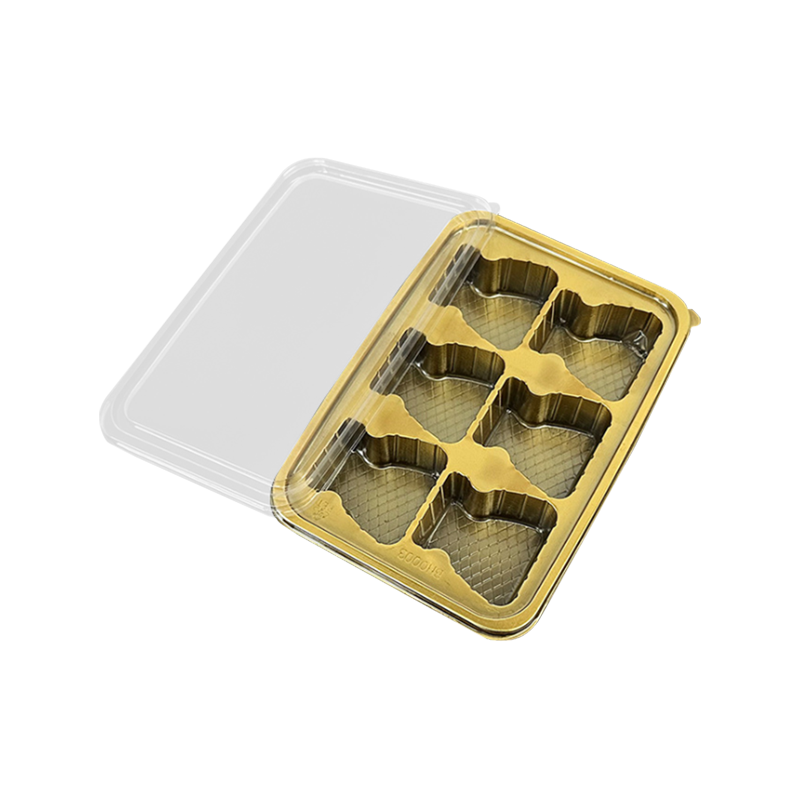
Trays tooled specifically around their sealing surface, such as a disposable baking and vacuum forming tray, keep that flange stable through repeated temperature swings that distort lighter parts.
Match the Tray to the Cold Chain, Not to the Catalogue Photo
A tray is only as good as the temperature profile it is asked to survive, and that profile is usually wider than the buyer expects:
- Chilled, 0-4°C: bakery, sushi, salads, cut fruit. Clarity and anti-fog performance drive the choice; PET and PS dominate.
- Frozen, -18°C: prepared meals, dough, seafood. PP holds impact strength better; avoid sharp internal corners that concentrate stress.
- Hot fill and microwave: PP only, with a lid rated for the same temperature.
- Ambient and dry: oxygen and light matter more than moisture, so headspace and any barrier layer become the specification.
Anti-fog performance has a shelf life of its own. Lids stored in heat or direct sun lose fog control before they are ever used, so keep them in the original carton and check the function on a sample from the current batch.
Freezer burn is a packaging symptom, not a product defect. It is ice leaving the product surface and re-forming inside the pack. A thicker tray will not stop it if the seal is loose or the headspace is large.
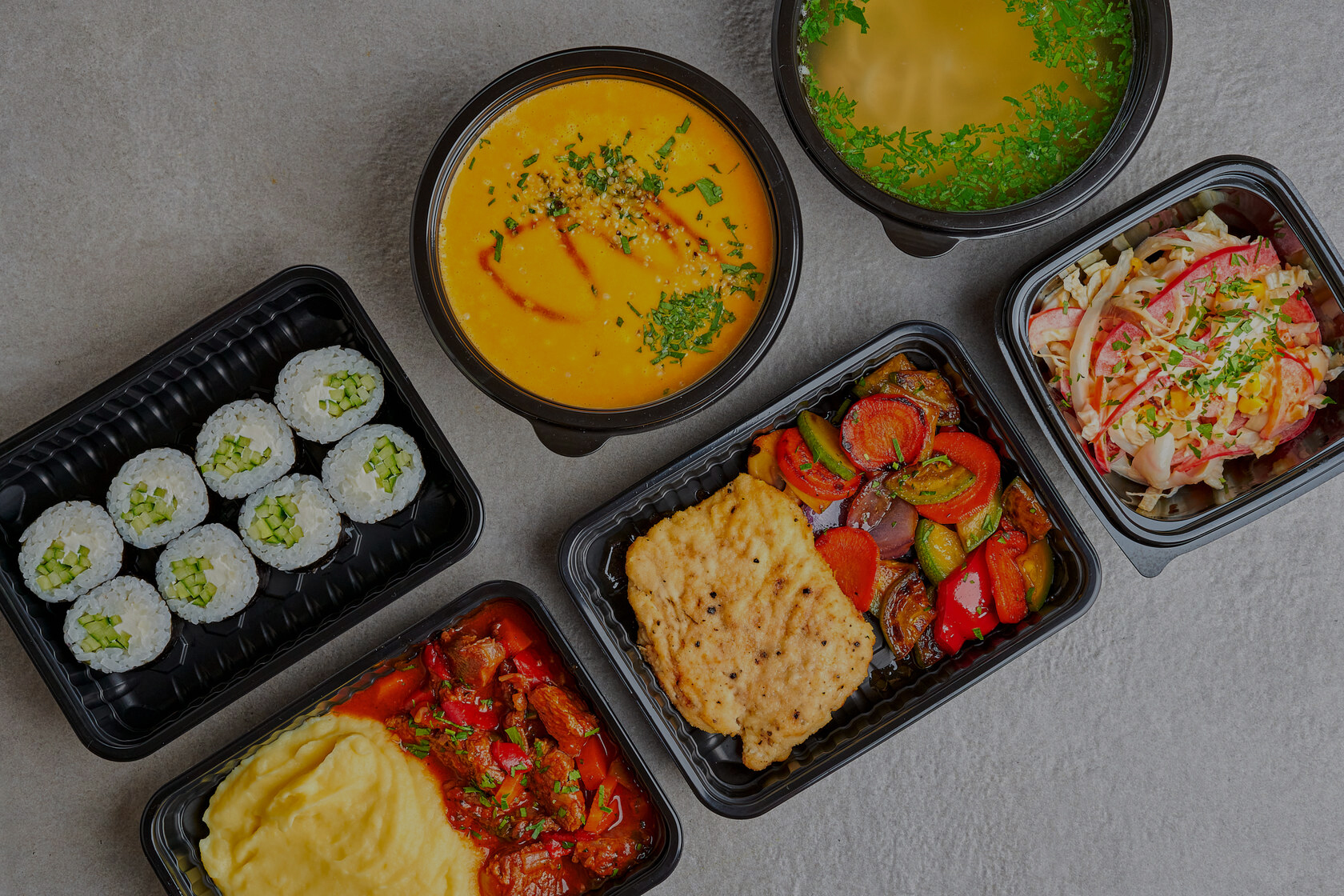
A single production line often needs all three polymers, which is why it makes sense to review the plastic food tray range by temperature class first and by shape second.
On frozen lines, a vacuum sealed packaging box for frozen food is the format that keeps headspace low and the seal under control at -18°C.
What to Write on the Purchase Order
Vague specifications produce expensive surprises. A tray order should carry at least the following:
- Polymer and grade, with the food-contact document reference.
- Sheet gauge and the tolerance you will accept, commonly ±0.05 mm.
- External dimensions, cavity depth, nesting height and dimensional tolerance, often ±0.5 mm.
- Flange width and flatness requirement for the sealing surface.
- Lid or film type, and whether the seal is heat, snap or vacuum.
- Temperature range and end use: chilled, frozen, microwave, hot fill.
- Colour, surface finish, and whether the sealing area must stay free of print.
- Packing details: trays per sleeve, sleeves per carton, pallet pattern.
- Tooling ownership, sample approval route and the shelf-life test that decides acceptance.
That last item is the one buyers skip. A physical shelf-life test, run with the real product in the real tray at the real distribution temperature and checked on days 1, 3, 7 and 14, costs a fraction of a mould and answers the only question that matters. Tooling, by contrast, is a one-time cost: unit price moves with gauge, material and cavitation, and a 0.05 mm gauge reduction across a million units usually outweighs the entire negotiation on mould price.
The Short Version
Preservation in a plastic tray is not one property. It is a chain: the right polymer for the temperature, a wall thick enough to hold its shape without wasting material, a flange flat enough to seal, and a headspace small enough that the atmosphere inside the pack can actually be controlled. Change one link and the others have to compensate.
So the sequence is straightforward. Define the temperature profile and the shelf life you are promising. Choose PET, PP or PS against that profile. Put flange, headspace and tolerance requirements in writing. Then run the shelf-life test on the real product before tooling is cut. Everything after that is detail, and details are cheaper than recalls.
Rule of thumb: choose the polymer by temperature, the gauge by load and seal, and the headspace by shelf life, in that order.



 English
 عربى
 Español



 Custom PVC Blister Plastic Boxes Manufacturers
