The PS (polystyrene) food tray poses a higher risk of releasing harmful chemicals when in contact with hot food compared to a PET (polyethylene terephthalate) food tray. PS trays begin to soften and potentially leach styrene — a suspected carcinogen — at temperatures as low as 70°C (158°F), while PET trays are generally more stable up to around 70–80°C for standard grades and higher for crystallized variants (CPET). Understanding the chemistry, temperature thresholds, and real-world implications helps you make a safer, more informed choice for food packaging.
How PS and PET Food Trays Are Made — And Why It Matters
A PS Food Tray is manufactured from polystyrene, a petroleum-based polymer made by polymerizing styrene monomers. It is lightweight, rigid, and inexpensive to produce, which is why it is widely used in supermarket meat trays, deli containers, and fast-food packaging. However, the styrene monomer at its base is classified by the International Agency for Research on Cancer (IARC) as a Group 2B possible human carcinogen.
A PET Food Tray, on the other hand, is made from polyethylene terephthalate — the same base material used in clear plastic water bottles. PET is valued for its clarity, strength, and relatively inert chemical structure. Crystallized PET (CPET) is commonly used in oven-safe meal trays, while standard APET (amorphous PET) is suited for chilled or ambient food packaging.
The fundamental difference lies in molecular stability at elevated temperatures. PS is an amorphous polymer with a relatively low glass transition temperature, making it structurally vulnerable to heat. PET, particularly in its crystallized form, offers significantly greater thermal resistance.
Temperature Thresholds: Where Each Tray Becomes a Risk
Temperature is the single most critical factor in determining whether a food tray leaches chemicals. Here is a direct comparison:
| Property |
PS Food Tray |
PET Food Tray (APET) |
CPET Food Tray |
| Heat Deflection Temp. |
~70–80°C (158–176°F) |
~70°C (158°F) |
~220°C (428°F) |
| Microwave Safe |
No |
No (standard) |
Yes |
| Oven Safe |
No |
No |
Yes (up to 220°C) |
| Primary Chemical Risk |
Styrene migration |
Acetaldehyde (trace) |
Minimal |
| FDA Food Contact Approved |
Yes (cold/ambient use) |
Yes |
Yes |
Table 1: PS Food Tray vs PET/CPET Food Tray — Temperature and Safety Comparison
As the table shows, both standard PS and APET trays are unsuitable for hot food applications. However, PS carries a more significant chemical migration risk because styrene is a reactive monomer, whereas trace acetaldehyde from PET is considered far less hazardous at typical exposure levels.
Styrene Migration in PS Food Trays: What the Research Shows
Styrene migration from a PS Food Tray is not merely theoretical. Multiple peer-reviewed studies have documented measurable styrene transfer into food, particularly fatty or acidic foods and hot liquids. Key findings include:
- A study published in the Journal of Food Protection found styrene migration from PS containers into food increased significantly above 60°C, with fatty foods showing the highest absorption rates.
- The European Food Safety Authority (EFSA) set a Specific Migration Limit (SML) for styrene at 0.06 mg/kg of food — a threshold that can be approached or exceeded when PS trays contact hot, oily food.
- Hot coffee or soup served in PS cups or trays can show styrene concentrations of 10–40 ppb (parts per billion) after just a few minutes of contact.
- Long-term, repeated exposure to styrene has been associated with central nervous system effects, including fatigue, headache, and potential neurotoxicity, according to the U.S. National Toxicology Program.
These figures illustrate that the risk is real and quantifiable — not simply a precautionary concern.
PET Food Tray Chemical Profile: Is It Safer With Hot Food?
Standard APET food trays are not intended for hot food either, but their chemical migration profile is considerably more benign than that of PS Food Trays:
- The primary migration concern in PET is acetaldehyde, a naturally occurring compound also found in many fruits. At the trace levels migrating from PET into food, it is not classified as a carcinogen.
- Antimony trioxide, used as a catalyst in PET production, can migrate at very low levels. However, studies show migration stays well below 0.04 mg/kg — the EU's permissible limit — under normal use conditions.
- CPET trays, engineered for dual-oven use, have been extensively validated for thermal food contact and are approved for temperatures up to 220°C by both FDA and EU food safety regulators.
In summary, PET food trays — especially CPET — present a substantially lower chemical hazard with hot food compared to PS food trays, both in terms of the nature of migrating substances and the quantities involved.
Practical Use Cases: When to Choose PS vs PET Food Trays
Choosing between a PS Food Tray and a PET Food Tray should be driven by the specific food application:
When a PS Food Tray Is Appropriate
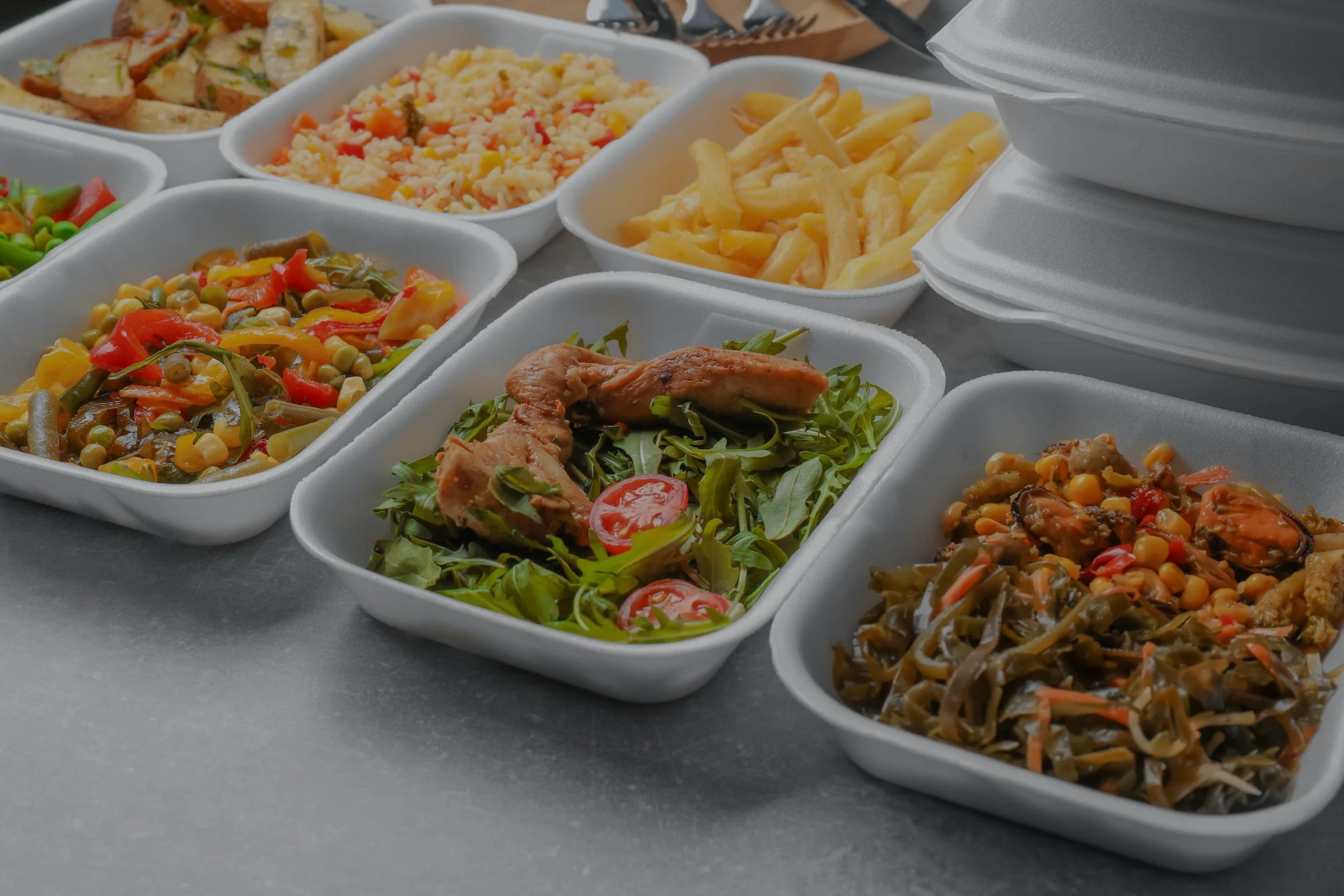
- Cold or ambient food packaging: supermarket meat, poultry, and produce trays
- Dry food items such as baked goods or confectionery
- Short-contact, non-fatty, non-acidic foods at room temperature
- Cost-sensitive, high-volume disposable tray applications
When a PET Food Tray Is the Better Choice
- Ready-to-eat meals requiring display clarity and food-grade safety
- Chilled deli items where superior transparency is valued
- CPET trays for hot-fill, microwave, or oven-ready meals — the most thermally robust mainstream plastic tray option
- Applications where recyclability and brand sustainability image matter
Regulatory Standing: What Food Safety Authorities Say
Both PS and PET food trays are legally approved for food contact use under specific conditions, but regulatory nuances are important:
- The U.S. FDA permits PS for food contact use but does not approve it for repeated microwave or high-temperature applications.
- The EU's Regulation (EC) No 10/2011 on plastic food contact materials includes both PS and PET, but sets a stricter SML for styrene (0.06 mg/kg) reflecting its higher risk profile.
- Several U.S. states — including California, Washington, and Maryland — have moved to restrict or ban PS food packaging due to environmental and health concerns, a trend not seen with PET.
- Japan's Food Sanitation Act and China's GB standards similarly impose tighter controls on PS migration limits compared to PET.
The global regulatory trajectory is clearly moving toward greater scrutiny of PS food trays, while PET — particularly CPET — continues to gain acceptance across hot food applications.
For anyone sourcing food trays professionally, the following conclusions are actionable:
- Never use a PS Food Tray for hot food. The styrene migration risk is real, measurable, and increasingly regulated worldwide.
- For hot-fill or heated meal applications, CPET Food Trays are the superior and safer choice, rated for temperatures up to 220°C.
- Standard APET food trays are also not suitable for hot food, but their residual risk at warm temperatures is significantly lower than PS food trays.
- If cost is the primary driver and the application is cold food contact only, PS Food Trays remain a viable option — provided temperature guidelines are strictly followed.
- Monitor local regulatory developments, particularly in the EU and U.S., as PS food tray restrictions are expanding, which may affect supply chain compliance.



 English
 عربى
عربى Español



 Custom PVC Blister Plastic Boxes Manufacturers
