


 English
 عربى
 Español
Disposable Fast Food Tray Guide: Materials, Formats and Smart Sourcing Tips
Packaging Notes from the Production Floor
Disposable Fast Food Tray: A Practical Guide to Choosing the Right Format
Materials, compartment design and the small details that decide whether a takeaway order arrives looking as good as it did when it left the kitchen.
Walk into a busy takeaway kitchen at seven in the evening and you will learn more about packaging than any catalogue can teach. The tray has to hold, stack, vent, seal, and still look presentable when the customer lifts the lid fifteen minutes later. That is why we have always treated a disposable fast food tray less as a commodity and more as a small piece of engineering.
We have spent years forming PET, PP and PS sheet into trays for bakeries, sushi counters, fried chicken shops and frozen food producers, and the questions our customers ask rarely change. Will it leak? Will the lid fog up? Will it survive the delivery ride? This guide gathers what we have learned into one place, so you can choose a format with confidence rather than guesswork.
What a Disposable Fast Food Tray Really Has to Do
Before comparing materials, it helps to be honest about the job. A fast food tray performs several tasks at once, and a format that excels at one often compromises another. The five demands we see most often are these:
- Containment. Grease, sauces and dressings must stay where they belong, which means clean corner radii, tight seals and no thin spots where the sheet stretches.
- Rigidity and stacking. A tray that flexes when lifted will spill. A tray that does not stack neatly will waste space in the van and on the counter.
- Temperature behaviour. Hot fried food, chilled sashimi and frozen dough each place a different load on the same basic geometry.
- Visibility. Transparent walls sell the food; opaque walls hide flaws but also hide appeal.
- Closure. Hinged lids, buckle clips, dome covers and film-sealed rims all solve different problems at the pass.
When a customer tells us a tray "does not work", the cause is almost always a mismatch on one of these five points rather than a fault in the plastic itself.
Choosing the Material: PET, PP and PS
Three thermoplastics dominate the category, and each has a personality. PET gives you glass-like clarity and a crisp feel; PP gives you toughness and heat tolerance; PS gives you a rigid, precise shape that takes colour and metallic finishes beautifully. None of them is universally better.
| Material | Character | Heat Notes | Best Suited To |
|---|---|---|---|
| PET | Clear, glossy, high stiffness, excellent product visibility | Cold and warm service; not intended for oven use | Sushi platters, desserts, fruit, cold noodles |
| PP | Tough, flexible, hinges and clips reliably | Microwave tolerant; handles hot sauces and fried food | Lunch boxes, rice dishes, fried chicken, curry |
| PS | Rigid, crisp, takes colour and metallic finishes well | Moderate tolerance; keep away from direct microwave reheating | Cold platters, snack trays, catering presentation |
If you want to go deeper on the middle column, our technical team has written a fuller explanation of the material behaviour of PP food trays, including how wall thickness and forming temperature affect the finished part.
Design Details That Decide the Customer Experience
Compartments and dividers
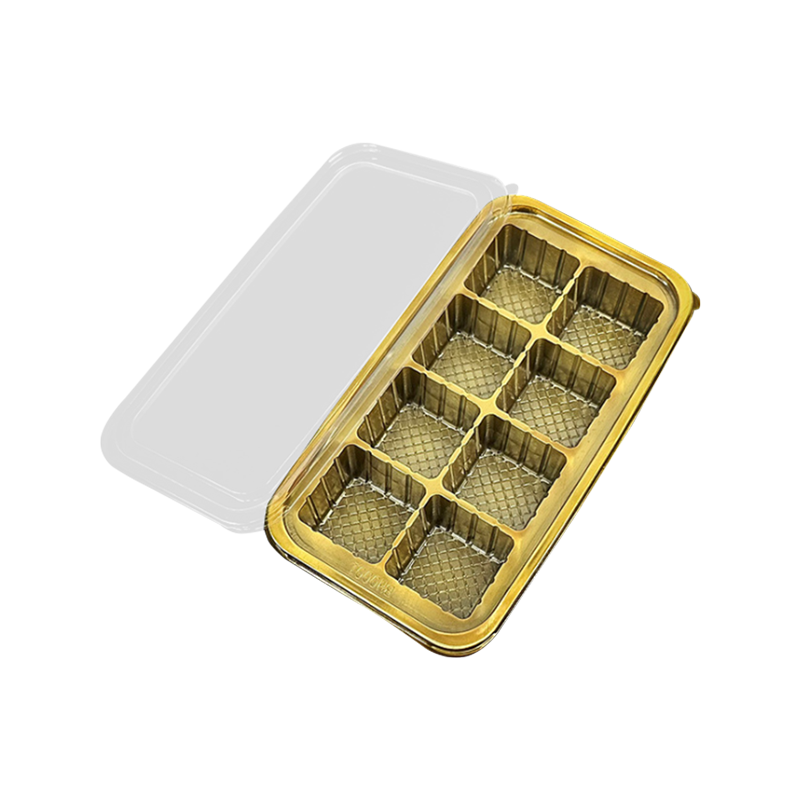
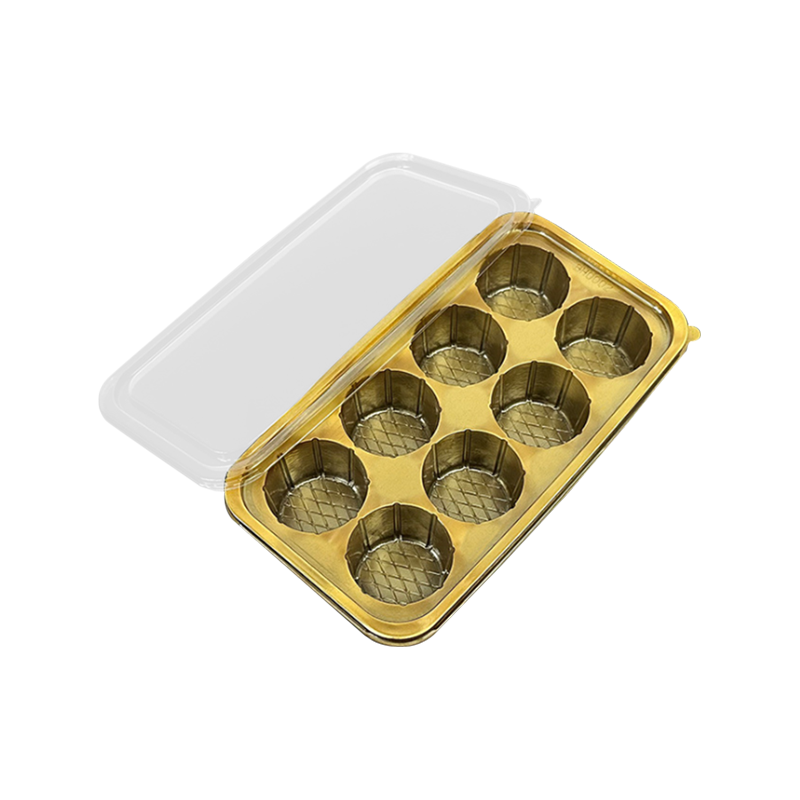
Separating components is not decoration. A three-compartment tray keeps sauce away from rice, stops fried items from going soft, and lets a customer see the whole meal at a glance. Eight and nine cavity formats do the same job at a smaller scale for pastries, sweets and tasting portions.
Lids, hinges and closures
A hinged lid that snaps shut with a single press saves seconds at every single order, and seconds add up over a shift. Buckle closures and dome covers suit dishes that need headroom, while flat film-sealed rims are the better answer for vacuum and modified-atmosphere packing.
Anti-fog and anti-overflow thinking
Condensation is the quiet enemy of cold food display. An anti-fog cover keeps the view clear when a chilled tray moves from a cold room into a warm shop. On the hot side, an overflow channel and a raised rim do the same job for thin sauces and dressings.
A tray that saves four seconds on the line but costs the customer a stained bag is not a saving at all.
For kitchens working with saucy, reheated dishes, a covered box with a deliberate overflow margin is usually the most practical starting point.
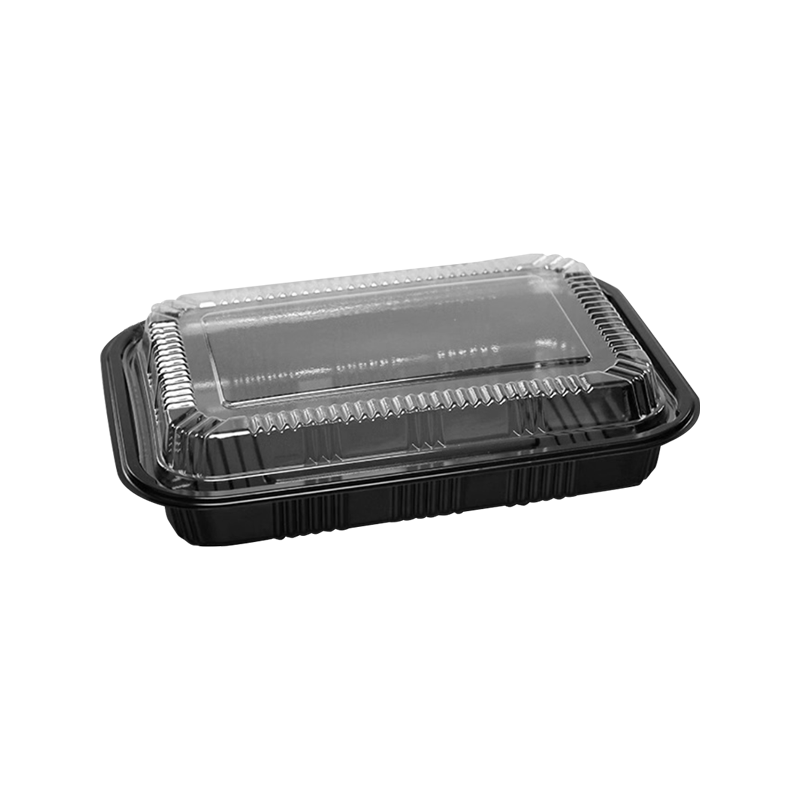 Microwave-Safe Anti-Overflow Covered Food Packaging BoxA black covered box with a deliberate overflow margin for saucy reheated dishes, designed to resist steam pressure and reduce splashing during microwave heating.View Product →
Matching the Tray to the Menu
Most operators do not need one tray; they need three or four that work together as a system. A short mapping exercise usually settles the question faster than a sample box ever will.
- Fried chicken and hot mains: a rigid PP container with venting and a secure lid, ideally microwave safe for reheating.
- Rice bowls and lunch sets: multi-compartment trays that keep wet and dry components apart.
- Sushi and sashimi: clear PET platters, fan-shaped salmon boxes and black-base trays with transparent covers.
- Salads and cold deli: anti-fog covered boxes that stay readable in a chilled display.
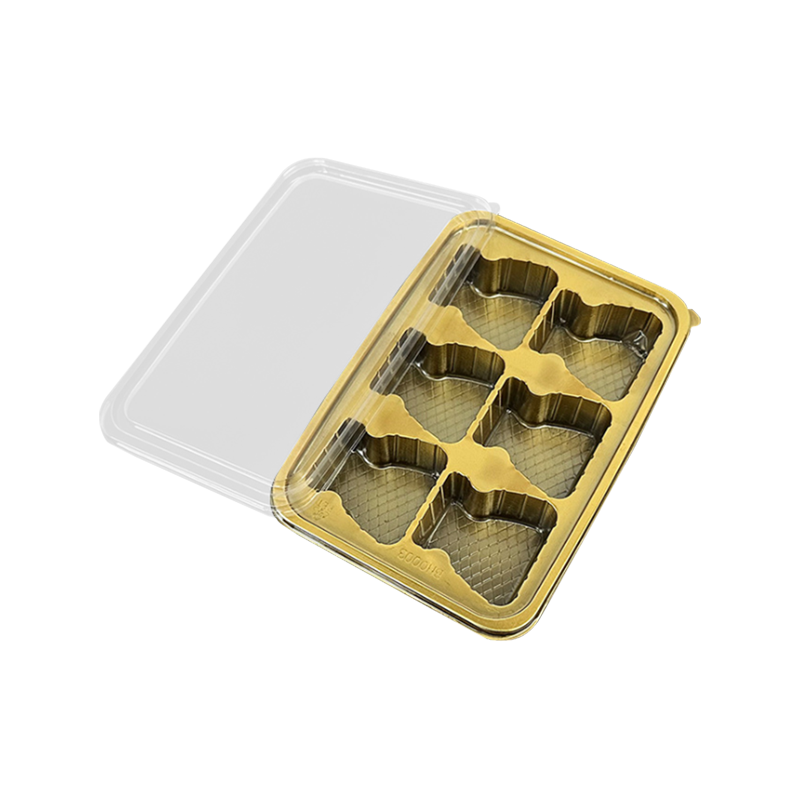
- Bakery and dessert: cavity trays in gold, silver or clear, where the tray is part of the presentation.
- Frozen and prepared foods: vacuum-formed trays that tolerate low temperatures without cracking.
Cold display is where small design choices show up most visibly, which is why anti-fog geometry deserves particular attention in salad and deli ranges.
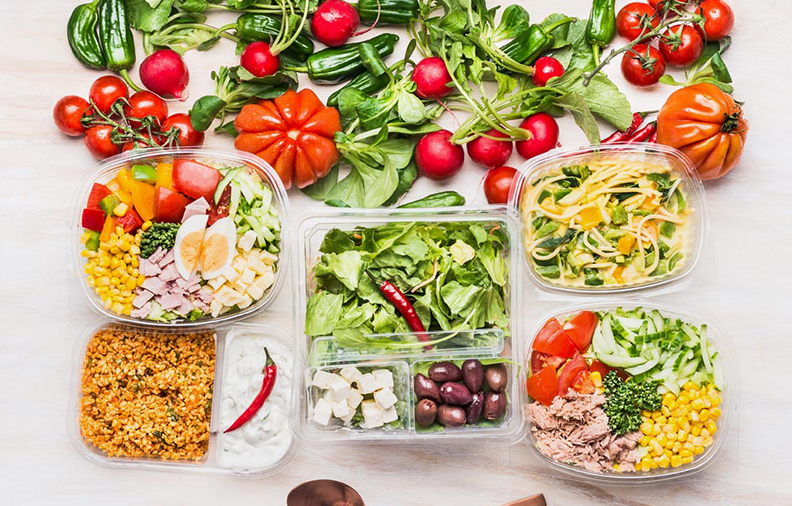
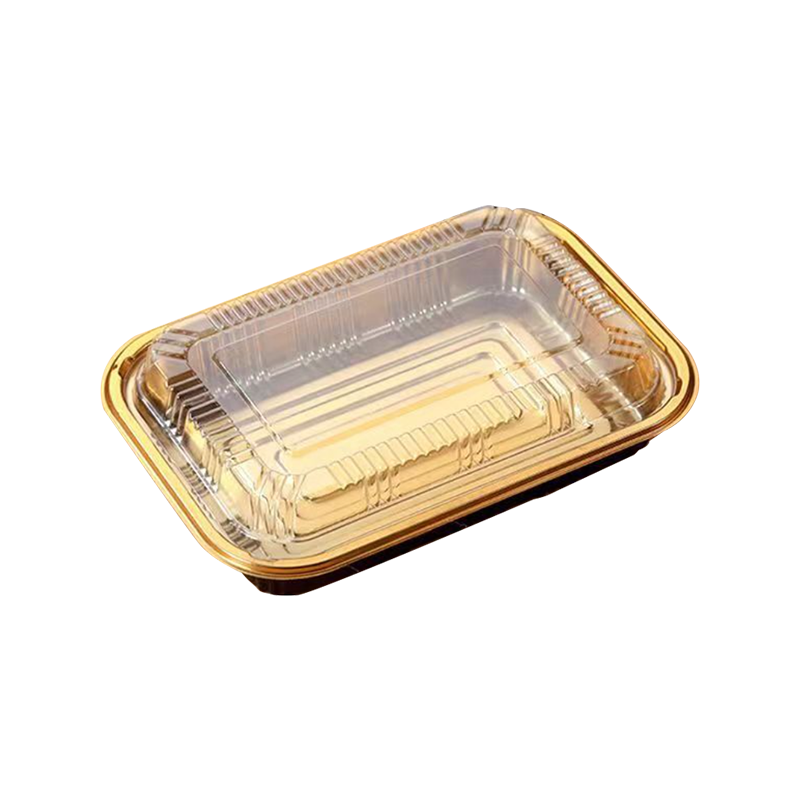 Disposable Anti-Fog Transparent Lunch Box with CompartmentsA transparent anti-fog disposable lunch box with internal partitions to keep foods separate and contents visible for takeaway or quick dining.View Product →
Sizing, Stacking and Logistics
Two trays that look identical on a screen can behave very differently in a delivery bag. We always ask customers to test three things: how the tray stacks when empty, how it nests when filled, and how much lateral play there is once the lid is closed. A few millimetres of clearance is the difference between a stable stack and a collapse at the third corner.
Weight matters too. Reducing sheet thickness saves material, but only up to the point where the base begins to bow under a hot, dense portion. The right answer is usually a slightly thicker base with thinner walls, rather than a uniform reduction across the whole part.
A useful rule of thumb. If a filled tray can be lifted by one corner without visible flex in the base, it will generally survive a normal delivery route without support.
Sustainability and Everyday Practicalities
Single-use does not automatically mean wasteful. A thin, well-formed tray that protects food and prevents spoilage often carries a lower overall footprint than a heavier reusable container that is never returned. What matters is right-sizing: the lightest format that still does the job, made from a material that can be sorted and recycled in the markets where it is sold.
We encourage customers to think about the full journey — forming, filling, transport, display, reheating and disposal — rather than about the tray in isolation. Material choice, wall thickness and geometry all contribute to that picture.
Please note. Heat tolerance varies between grades and wall thicknesses. Always confirm the intended reheating method with your supplier before printing microwave instructions on a lid or sleeve.
Working With a Manufacturer
Because trays are formed rather than assembled, a great result usually begins with a conversation about the mould. Our own workflow moves through four stages, and each one benefits from early customer input:
- Review the menu, portion sizes and serving temperature to define the brief.
- Draft the geometry, including compartments, rim profile and lid type.
- Build and trial the mould, then check the first formed samples against real food.
- Confirm material, colour and packing method before volume production begins.
Small details such as embossed logos, matte and gloss finishes, or colour matching to a brand palette are easiest to settle at stage two, before tooling is cut. If you would like to see how these formats sit together as a family, you can browse our plastic food tray range by material and application.
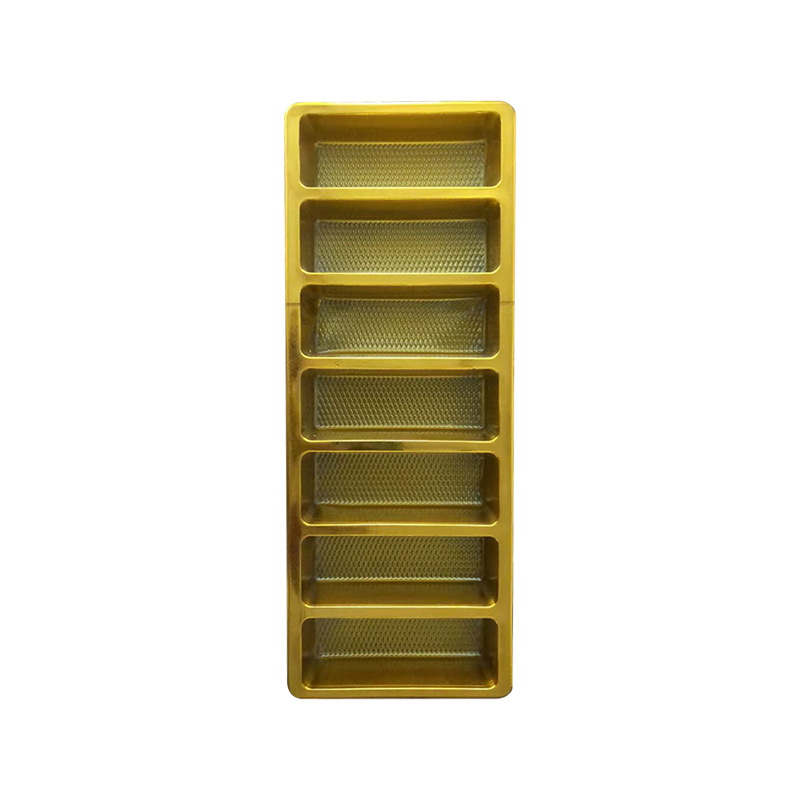 Multi-Functional Separated PET Food Packaging TrayA gold PET tray with multiple compartments, stackable design and air channels to keep vegetables, cut fruit and cooked foods separate in storage and transport.View Product →
A Final Word
The best disposable fast food tray is rarely the cheapest one on the quotation, and rarely the most elaborate either. It is the one that matches the food, the kitchen tempo and the journey to the customer without asking anyone to compromise. Start with the material, test with real meals, and let the details — the lid click, the clear cover, the tidy compartment — do the persuading.
In short. Choose the material by temperature, the geometry by menu, and the closure by delivery distance. Everything else is refinement.
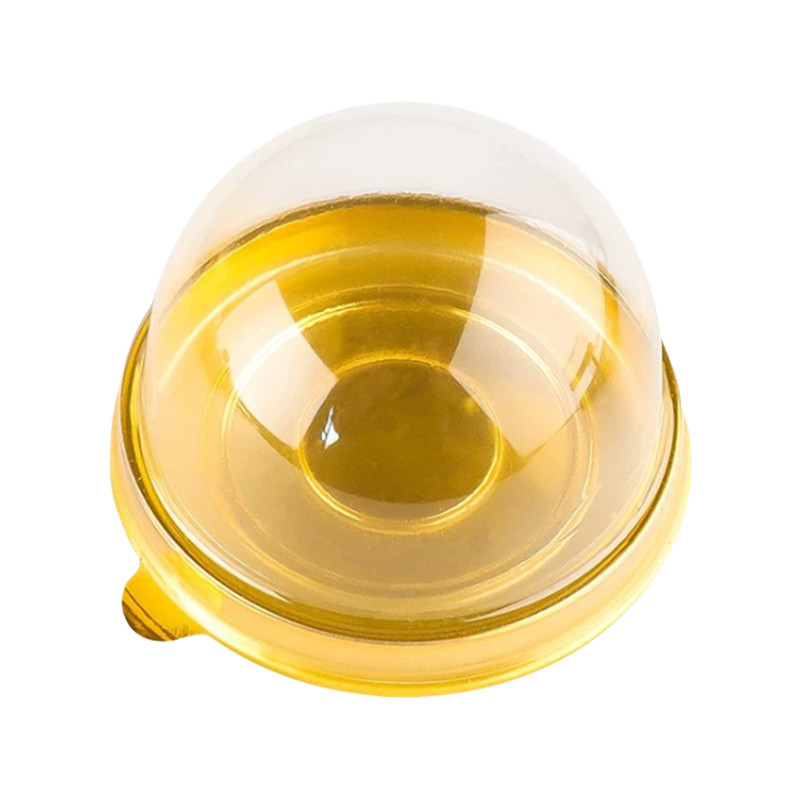



- The company requires rigorous, using a high starting point, trustworthy, quality, and actively develop and innovate, the pursuit of excellence route!
CONTACT US
- Tel: +86-15026677788
- E-mail: [email protected]
- Add: No.11 Huafeng Road, Anhua Community, Anhua Town, Zhuji City, Shaoxing, Zhejiang, China
GET A QUOTE
Copyright @ Donghang Polymer Material Technology Co., Ltd. All Rights Reserved.
 Custom PVC Blister Plastic Boxes Manufacturers
